

The Ethnographic Museum in Khartoum is home to a remarkable collection of artifacts reflecting the ethnic diversity and customs of a vast and complex country. This post is a tribute to the collection. Descriptions of the exhibits below are taken from the Museum’s webpage or exhibit labels. In some cases exhibit labels are missing, incomplete or incorrect.
I am grateful for any corrections or additional information readers can provide.
Thank you, Zoe Troy, for your expert comments.
See too the Museum’s Facebook Page.
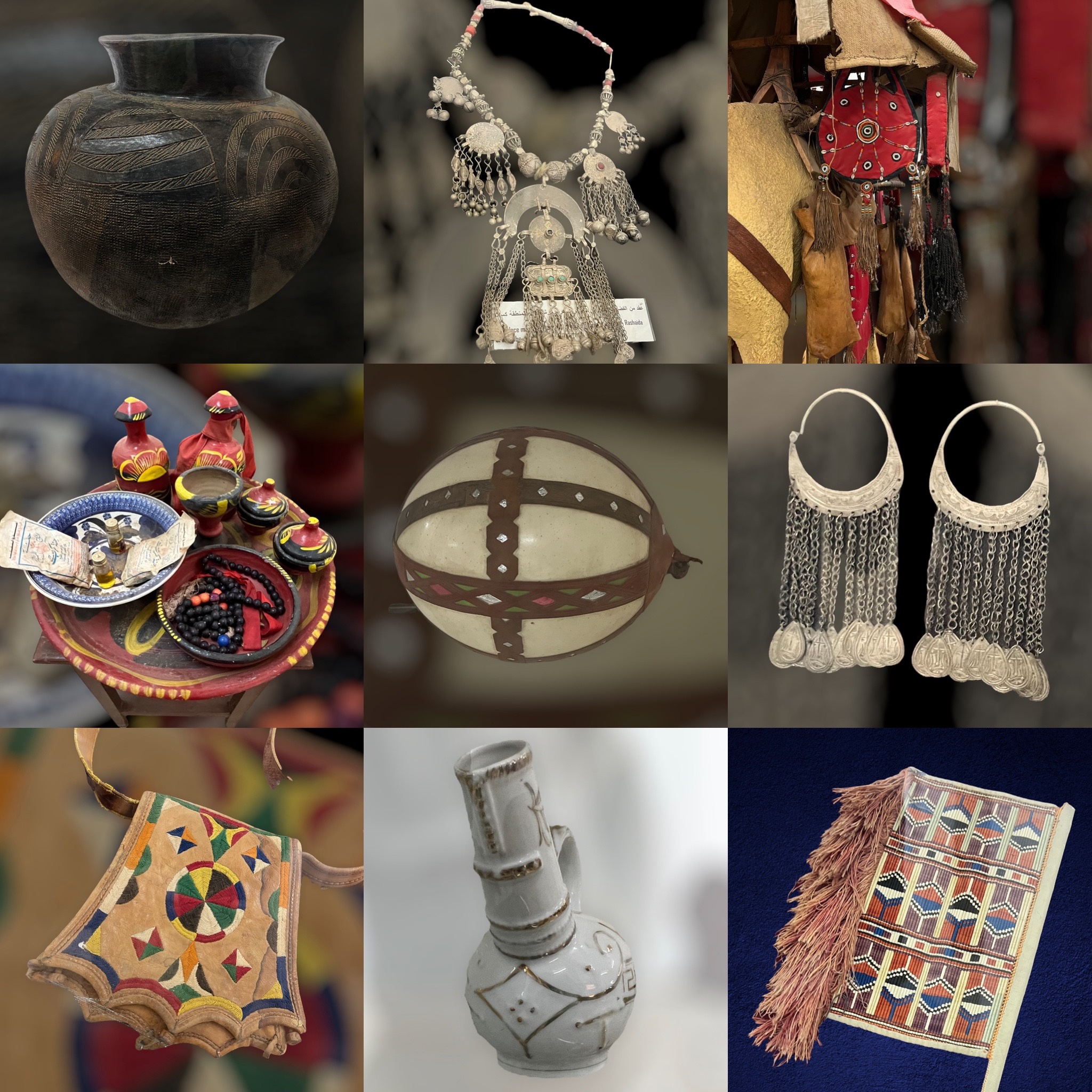
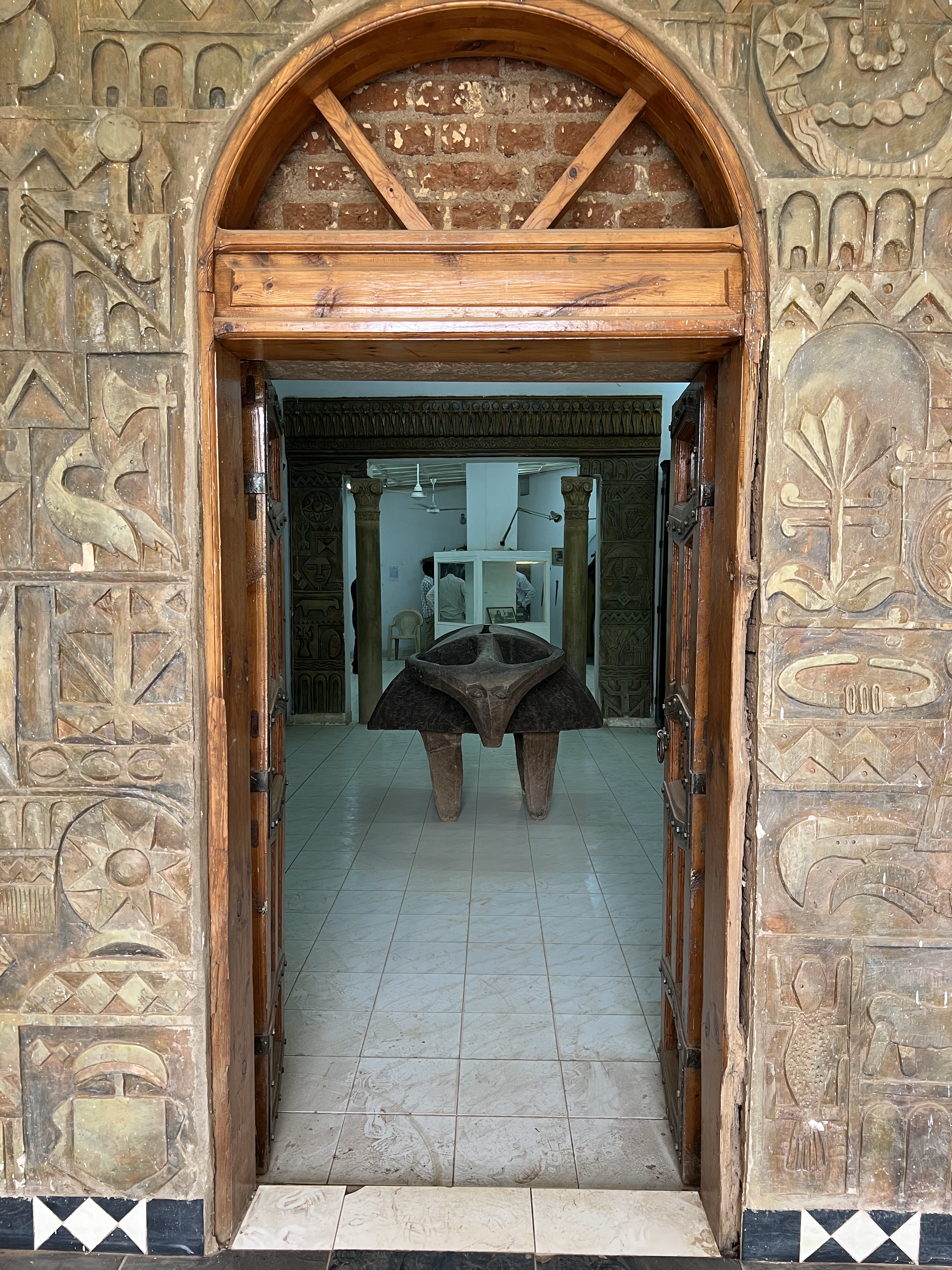
Above just some of the wonderful exhibits in the collection. Scroll down to read descriptions of these pieces. Title photo, elegant woven provisions cabinet for nomadic tribes. Below, the entrance into the main exhibition hall of the museum, with the Sultan of Yambio’s imposing wooden war drum centre stage. This piece was looted by the British during a punitive expedition (Zoe Troy).
Hear the drum being played in Museum’s Facebook Page.
Below, museum dioramas.

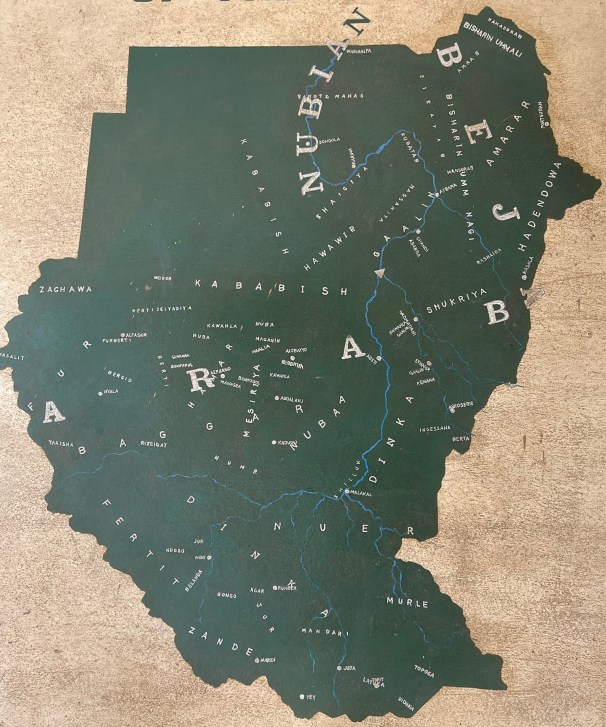
Below map illustrating the homelands and distribution of Sudanese tribes. The Museum recreates scenes from Baggara, Kassala, Nuba, Rashaida and Southern Sudanese life in diorama form. See its website and Facebook page for photos of these.
Below, Pack-bull of Baggara Arabs, restricted today to the savannah between Kordofan and Lake Chad.

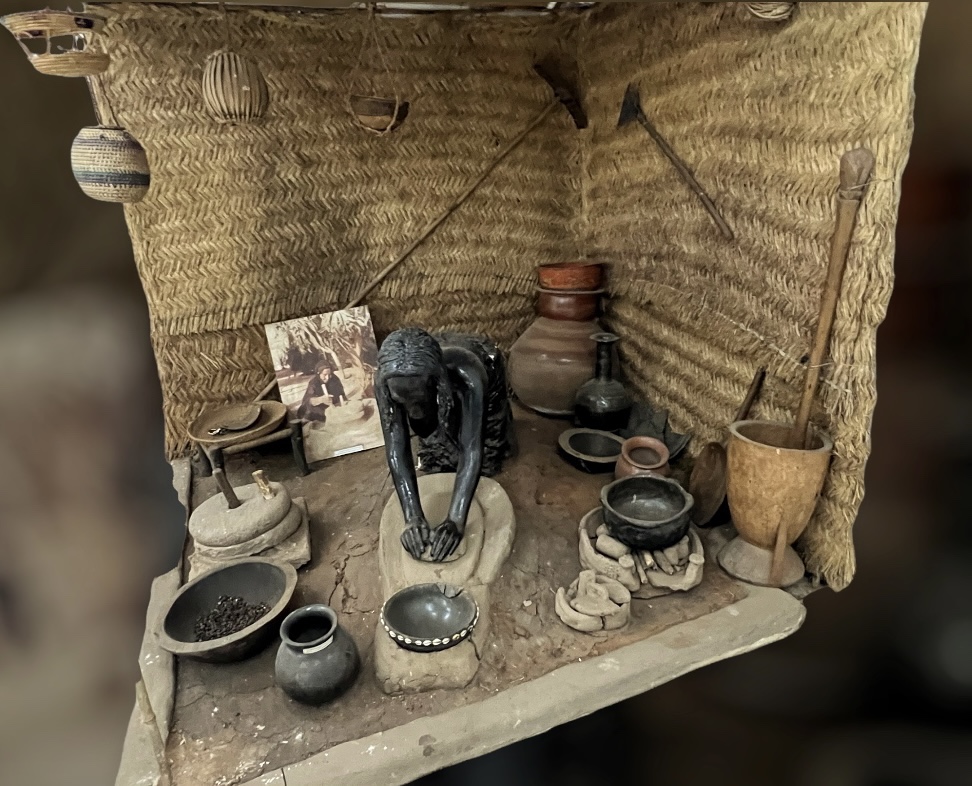
Below, left, recreation of a Nuba Kitchen typical of the Tosomi Hills. Centre, Kambala Dancer from the Nuba Mountains of Kordofan and right, tent of the Baggara (cattle people), a semi-nomadic people ranging between the White Nile and Lake Chad The dome-shaped tents are made of mats of palm fibre.
For more on Nuba culture of music and dance, see Kambala
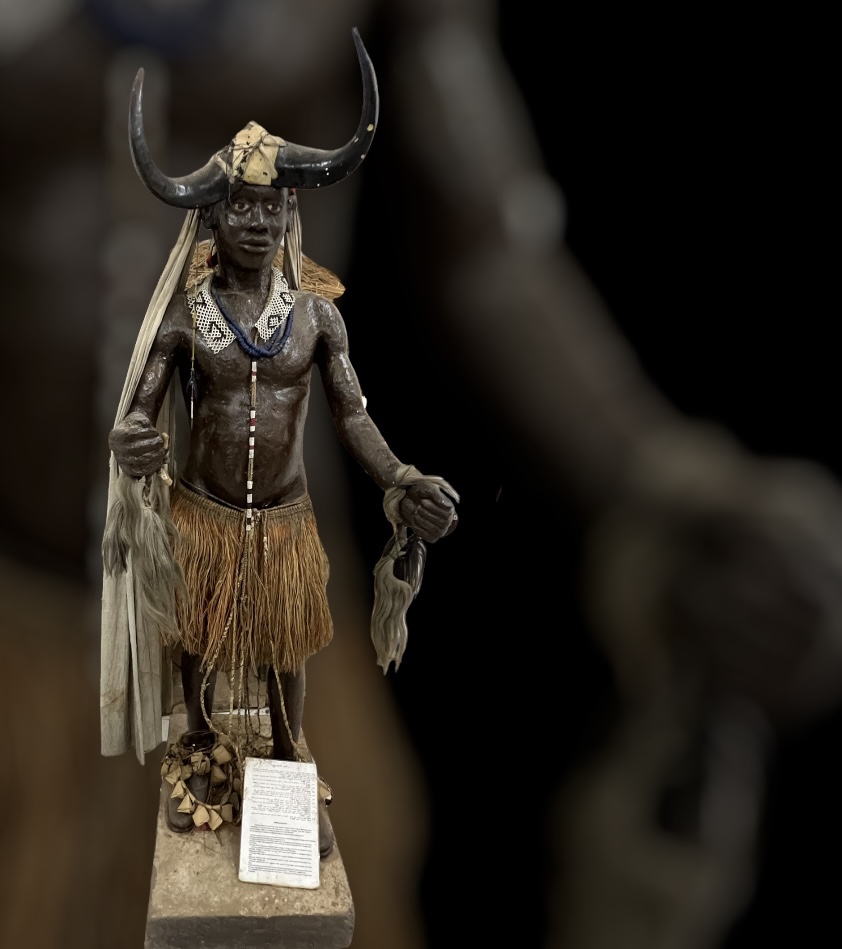
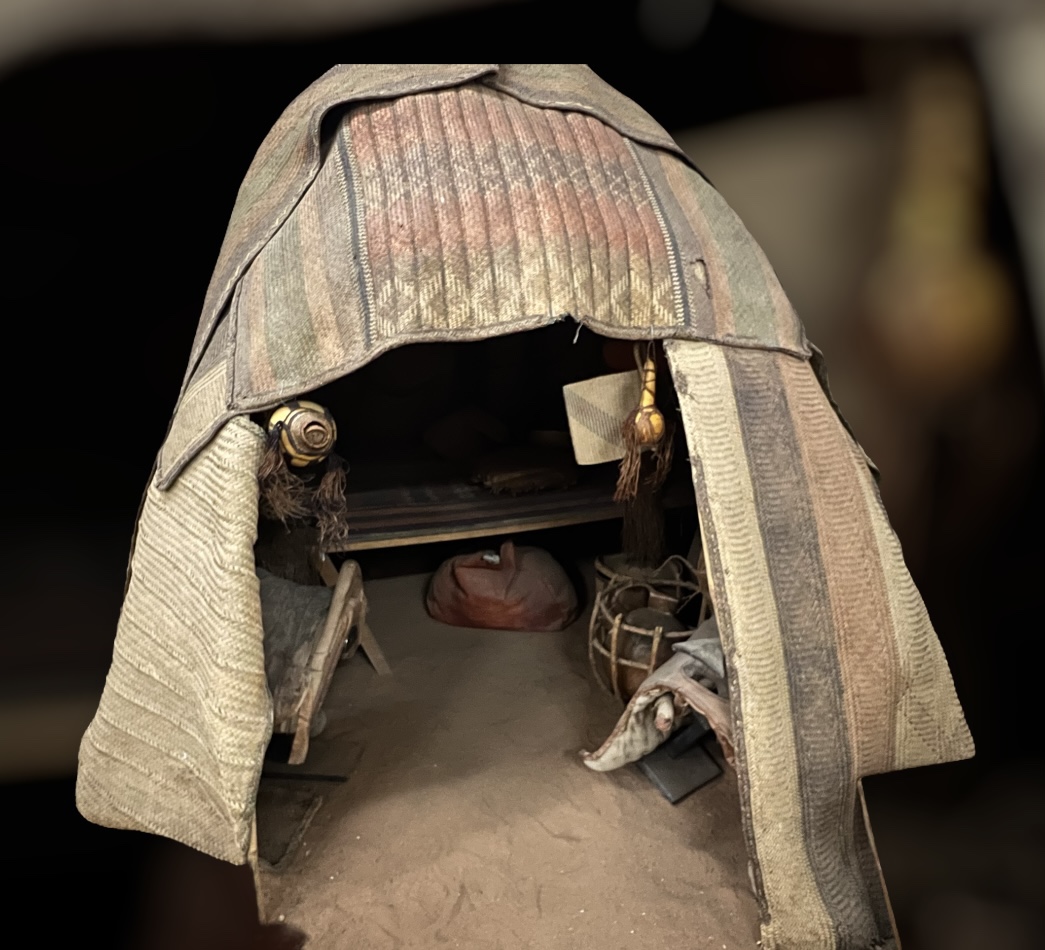
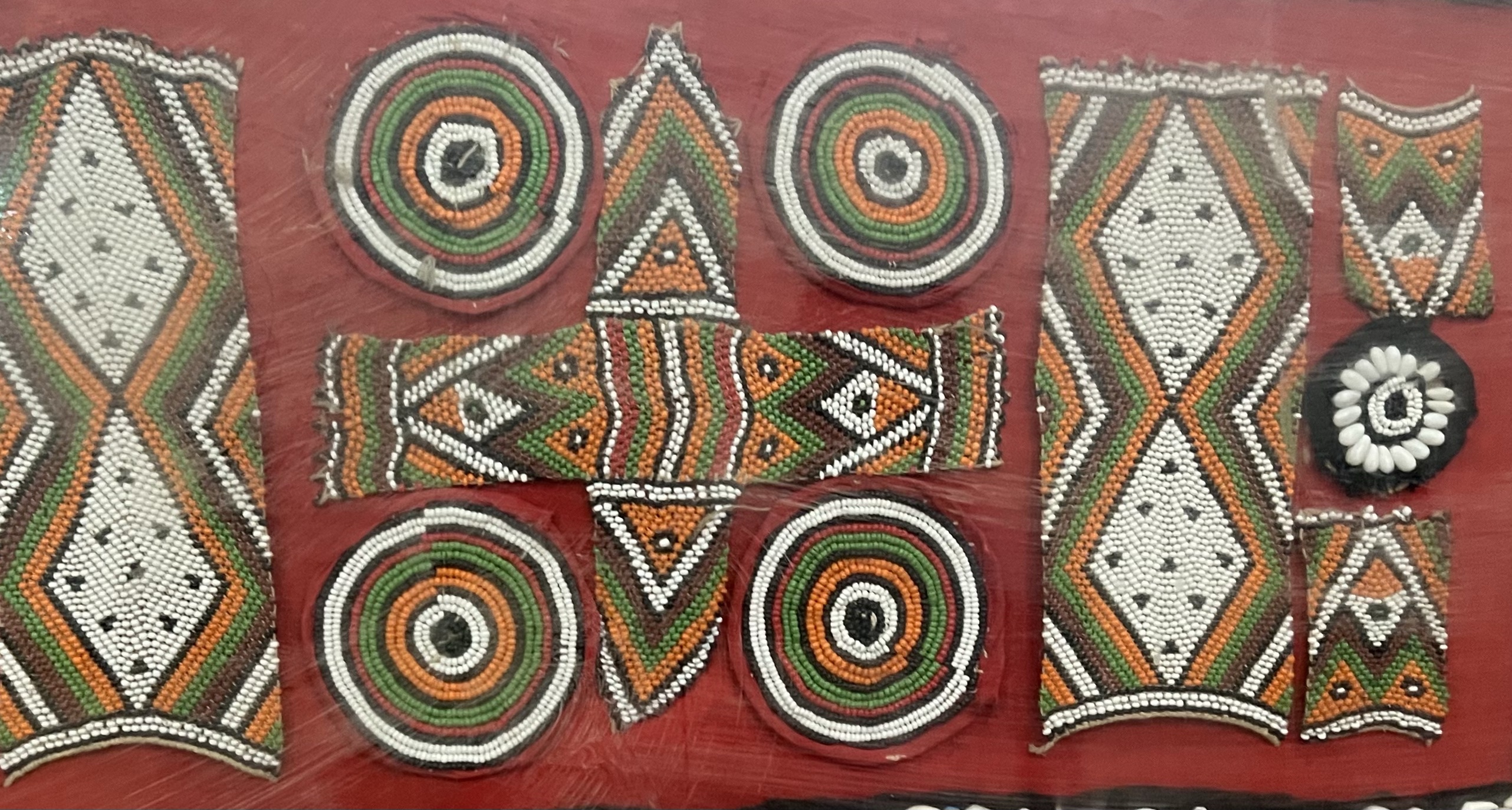
Below, detail of a bridal mat of the Beni Amer of Tokar, decorated with cloth, beads and cowries. These mats were frequently passed from mothers to their daughters on the occasion of their marriage.
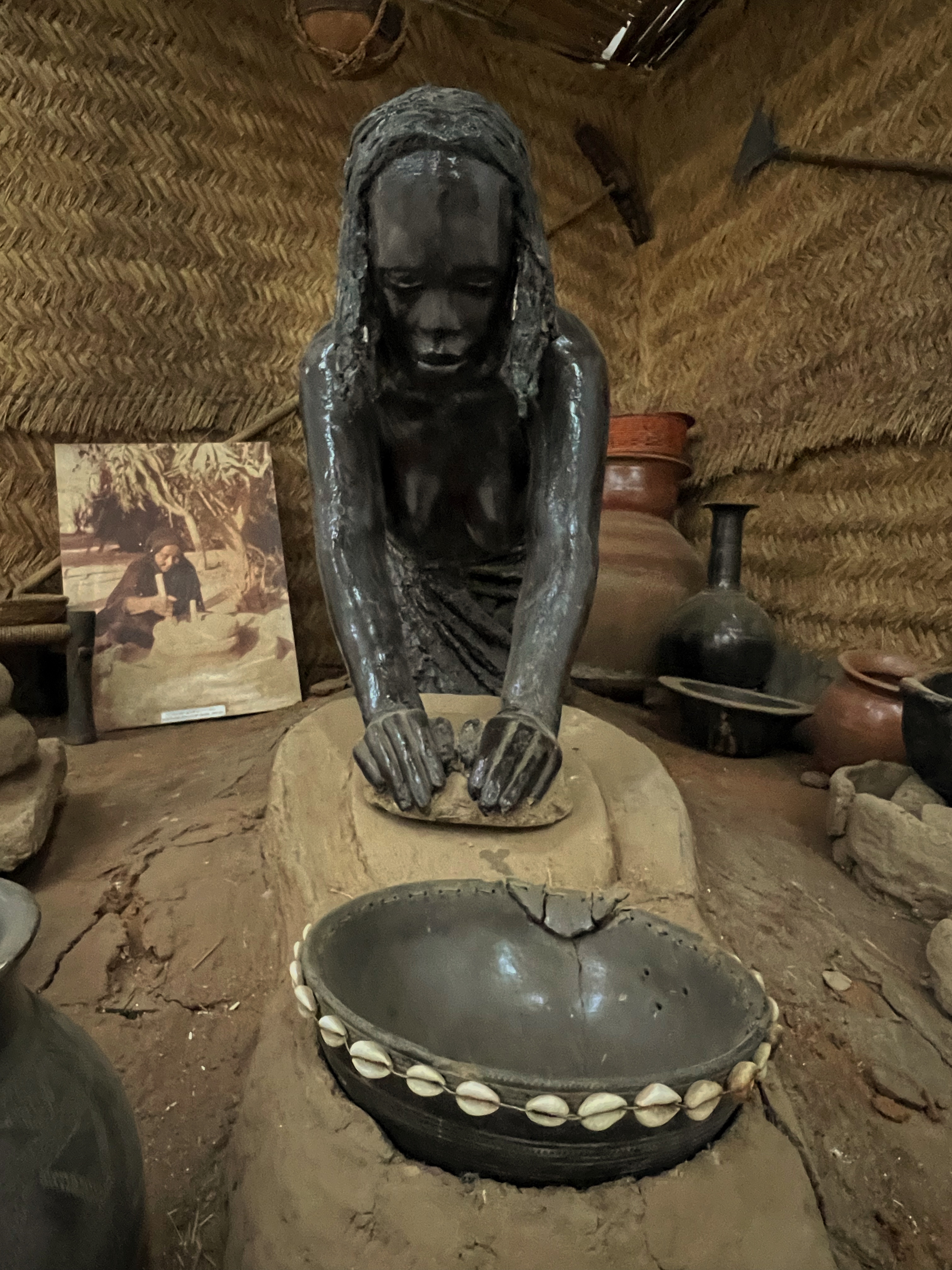
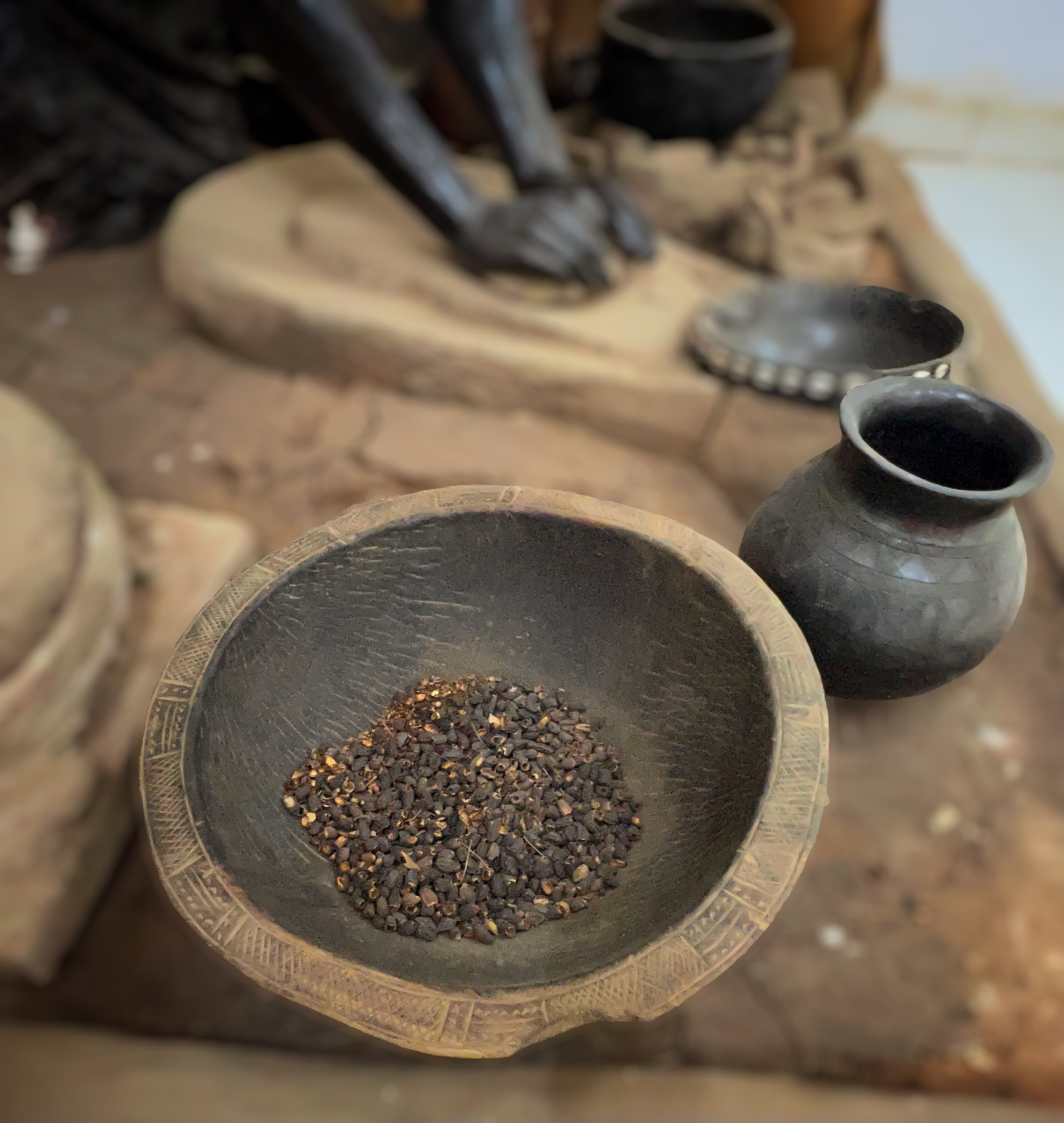
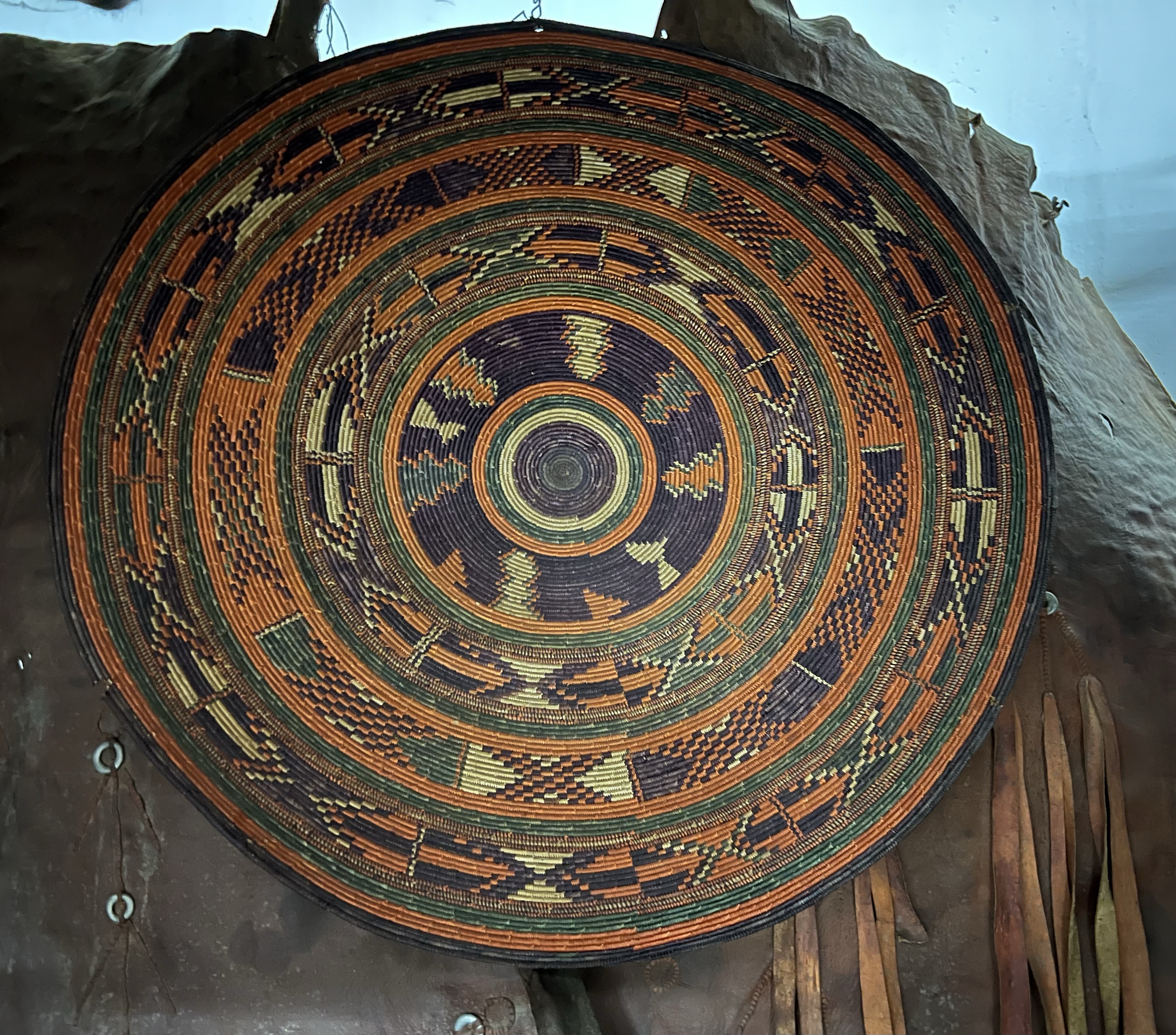
Above, aspects of the Nuba kitchen recreation and a woven tabaga or food cover. The young Nuba woman is grinding sorghum on a grindstone, known as a murhaka. Numerous songs and folktales are associated with the murhaka.
Read more on the murhaka and murhaka songs in Child Marriage and Kambala
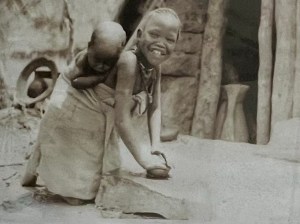
Above, photo of a Nuba child at the murhaka, displayed at the museum.
Below, a fine and rare example of a scent bottle with bead ornamentation, Hadenaow tribe, Gebeit area.
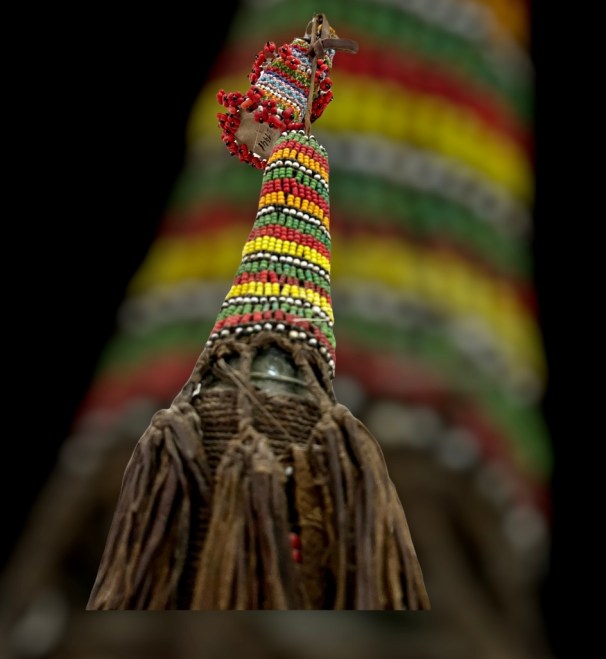

Above, Rashaida bridal jewelry. Below, man’s bead collar of Venetian beads – Malwal Dinka Tribe, Bahr al Ghazal.

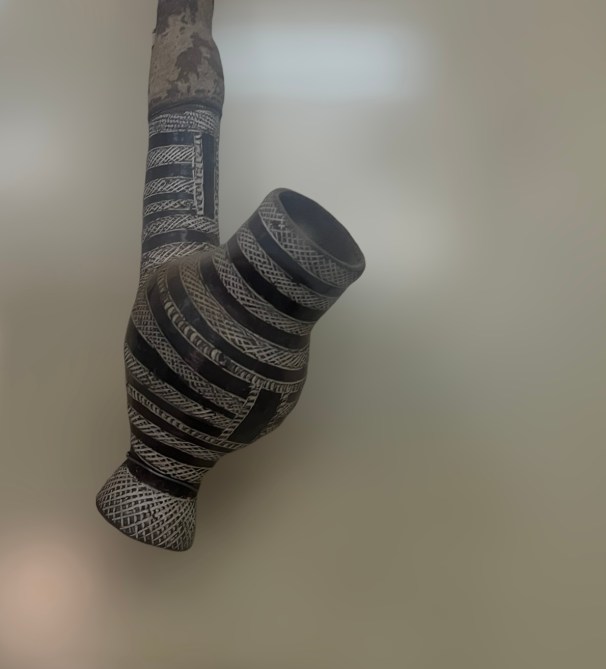
Below, gourd bowl of a tobacco pipe, Malakal area, Shilluk tribe.
Below, ostrich egg adorned with leather strips, used as a household ornament, Omdurman.

Below, from top left, a bird-headed coffee pot or jabana from the Kadugi area and top right, another earthenware coffee pot (from Omdurman?) and below it, merissa (beer) straining vessels from the Nuer tribe, Bahr El Zaraf. Bottom left, decorated gourd drinking, food and storage vessels and right, Sudanese gas stove and cooking pot.
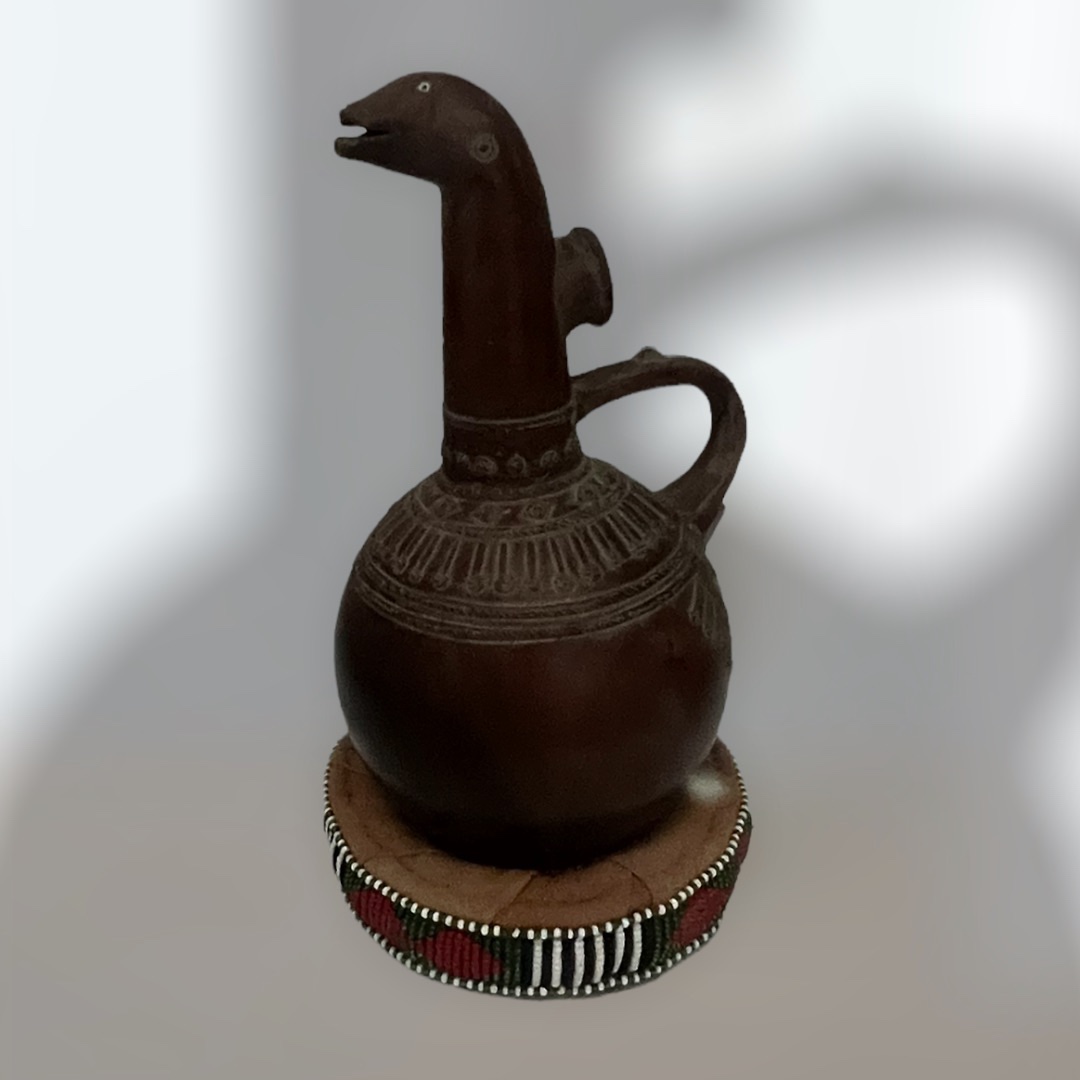
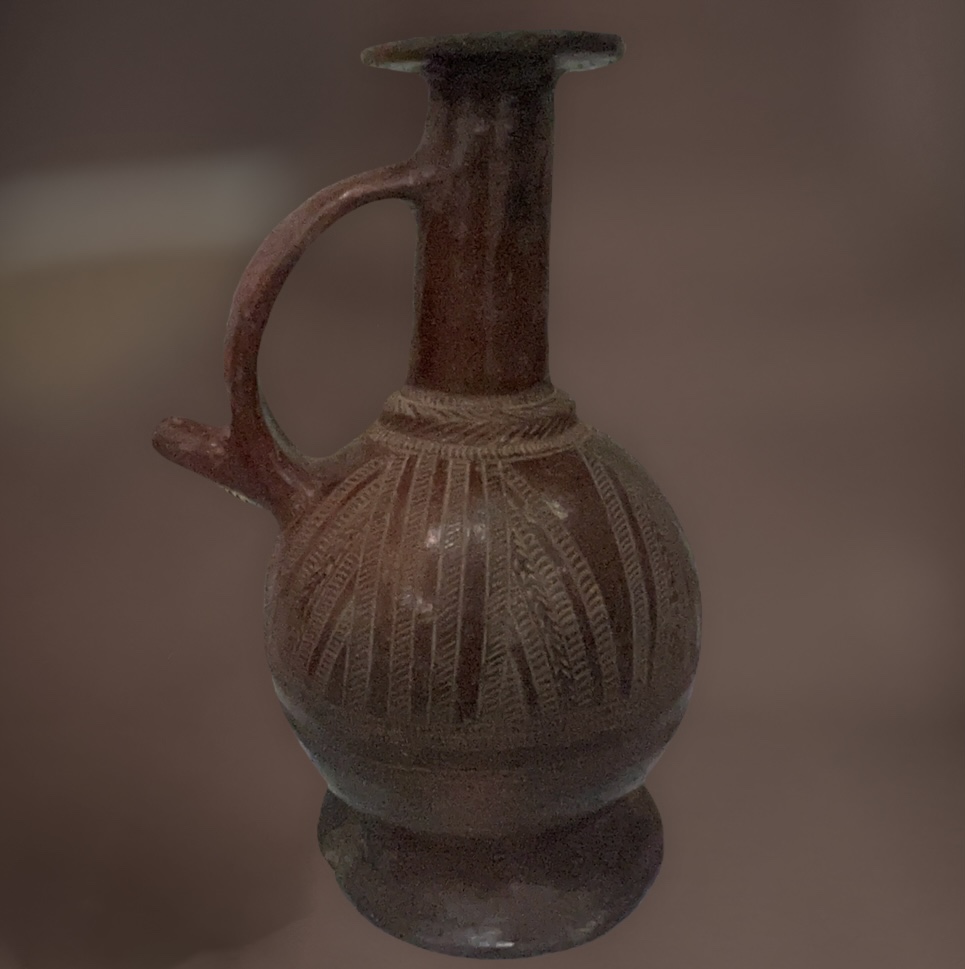
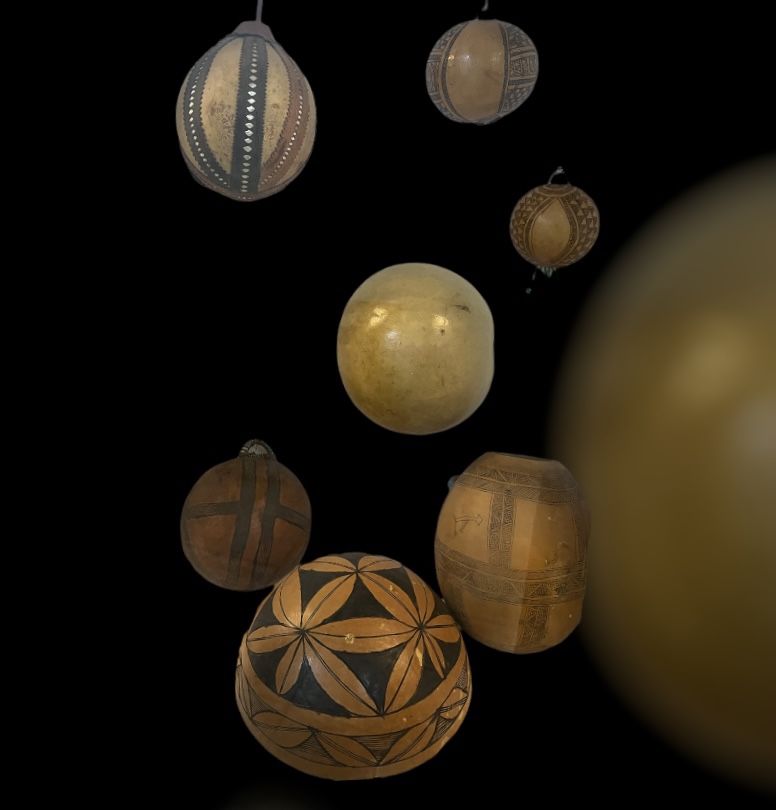
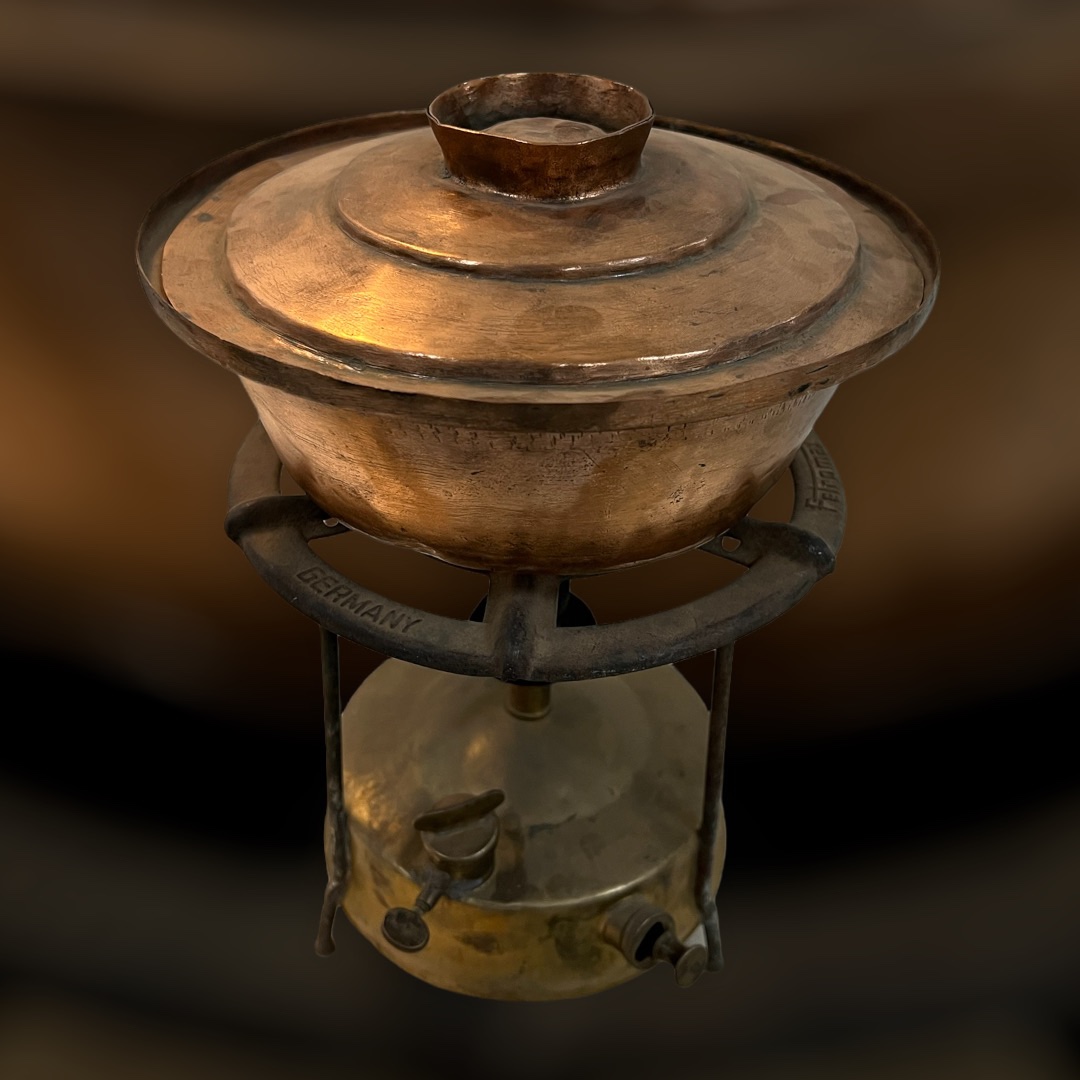
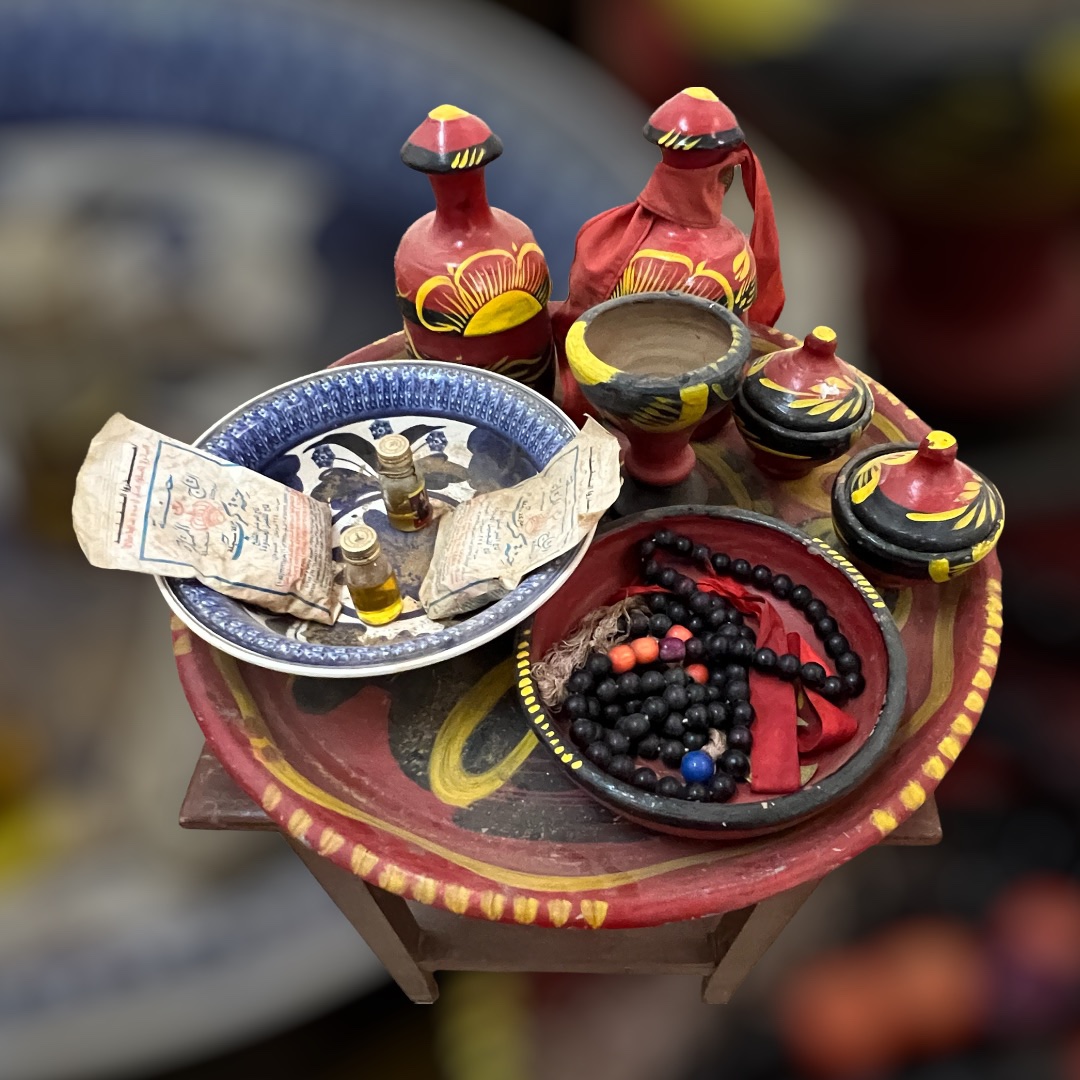
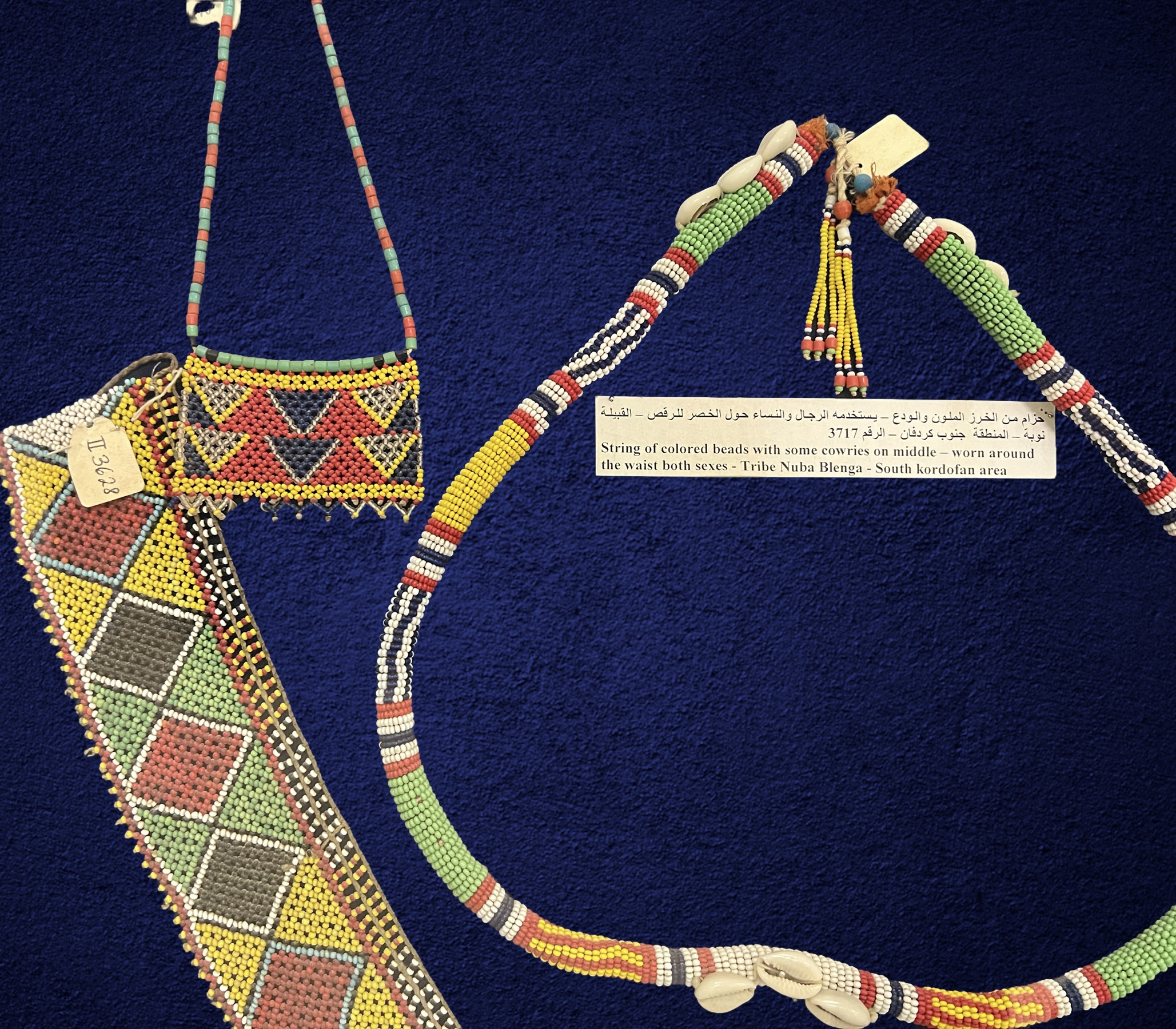
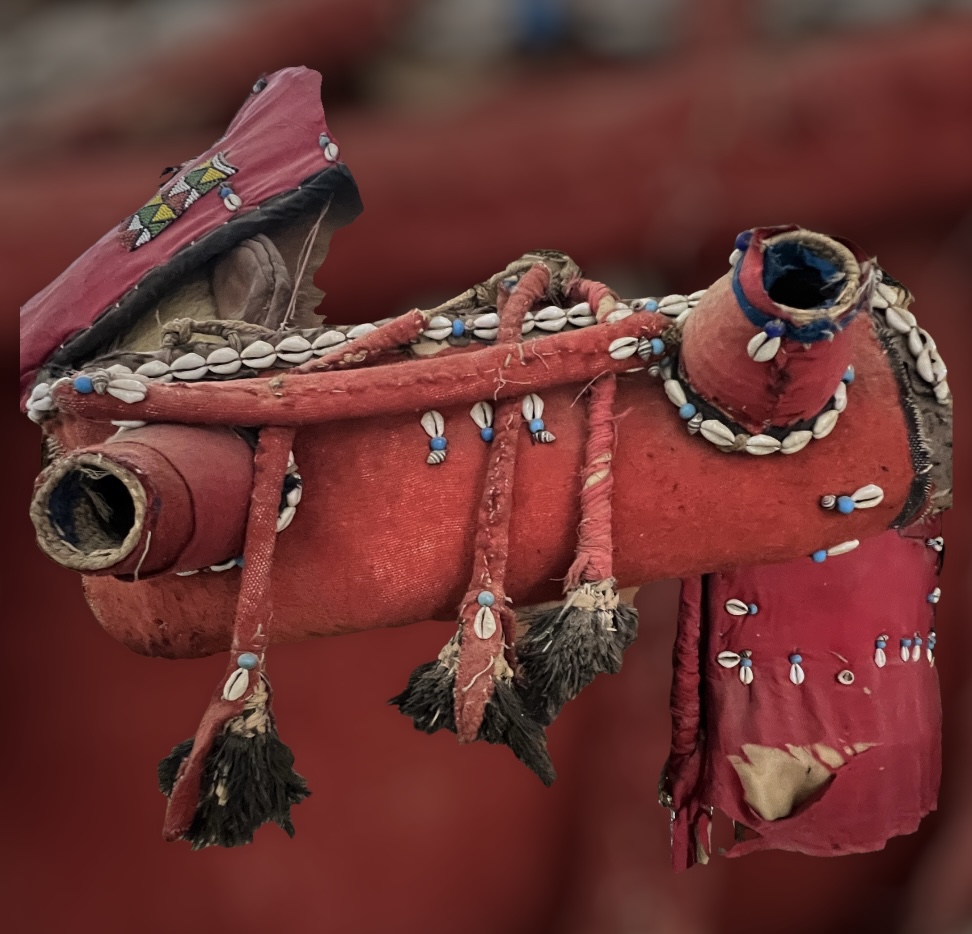

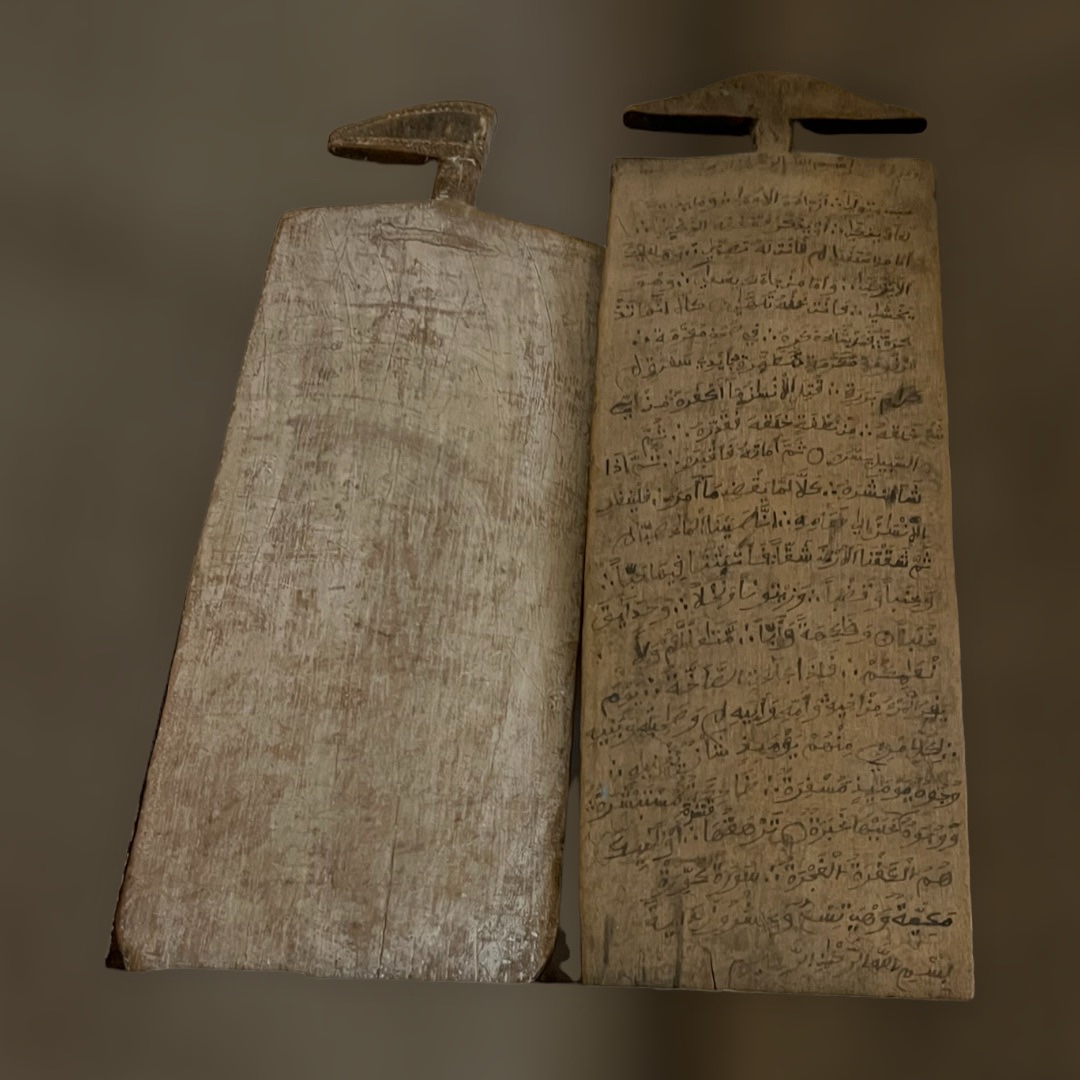
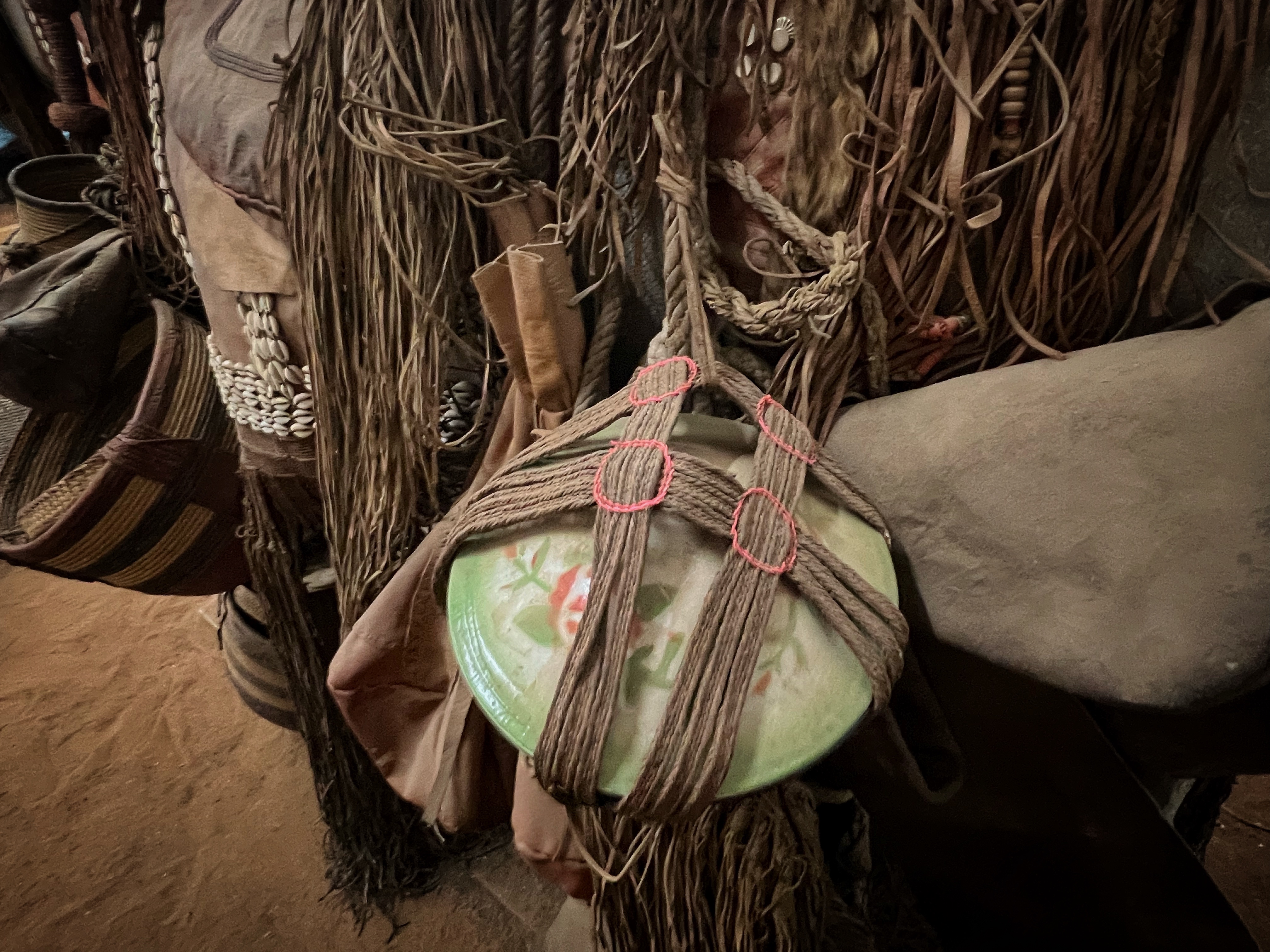
Above, top right, pieces associated with the wedding jirtig and henna rituals of northern Sudan. Top right, jewelry from the Blenba Nuba tribe, showing a bead and cowrie waist string. Below, water vessel displayed on camel litter for women from Beni Amer, Kassala area. Bottom left, embroidered leather bag / purse and right, prayer boards used by children for learning to write and memorize Quoranic text.
For more on the fascinating story of jirtig rituals, see The Clove’s Fragrance
and Anointing in Robes of Red and Gold.
See more examples of lawH or prayer boards in Birds of the Soul and Unmaskings; In Conversation with Dar Al Naim .
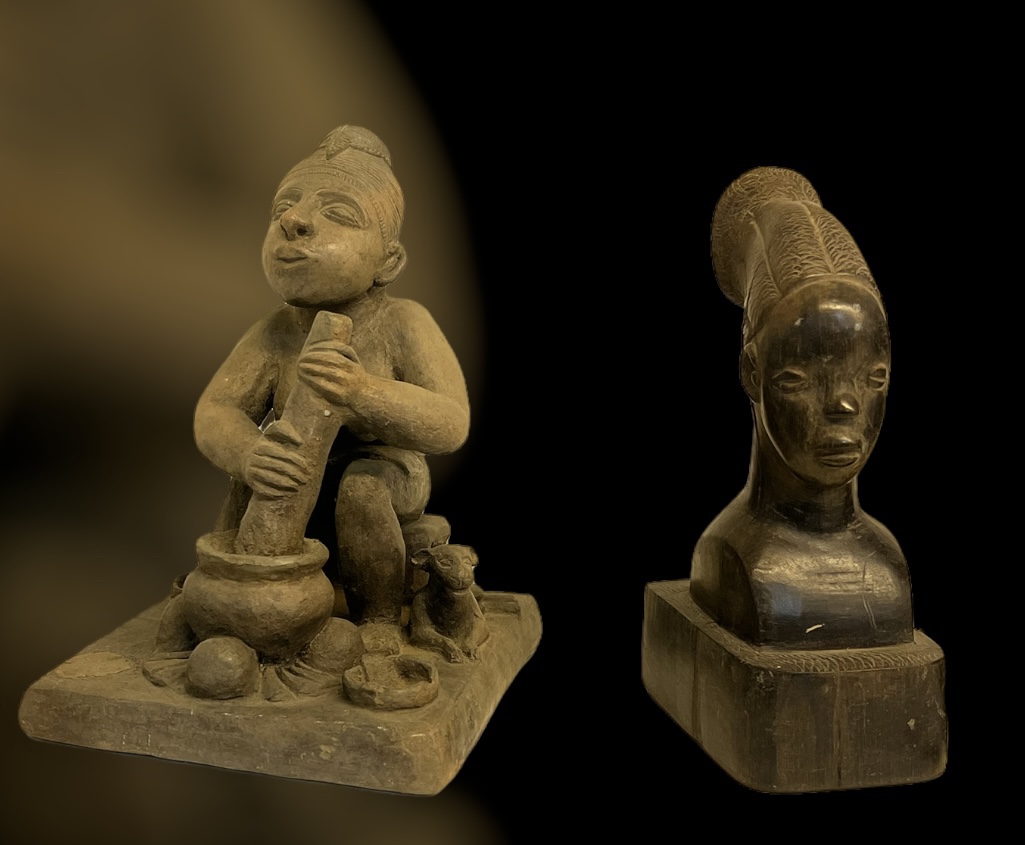
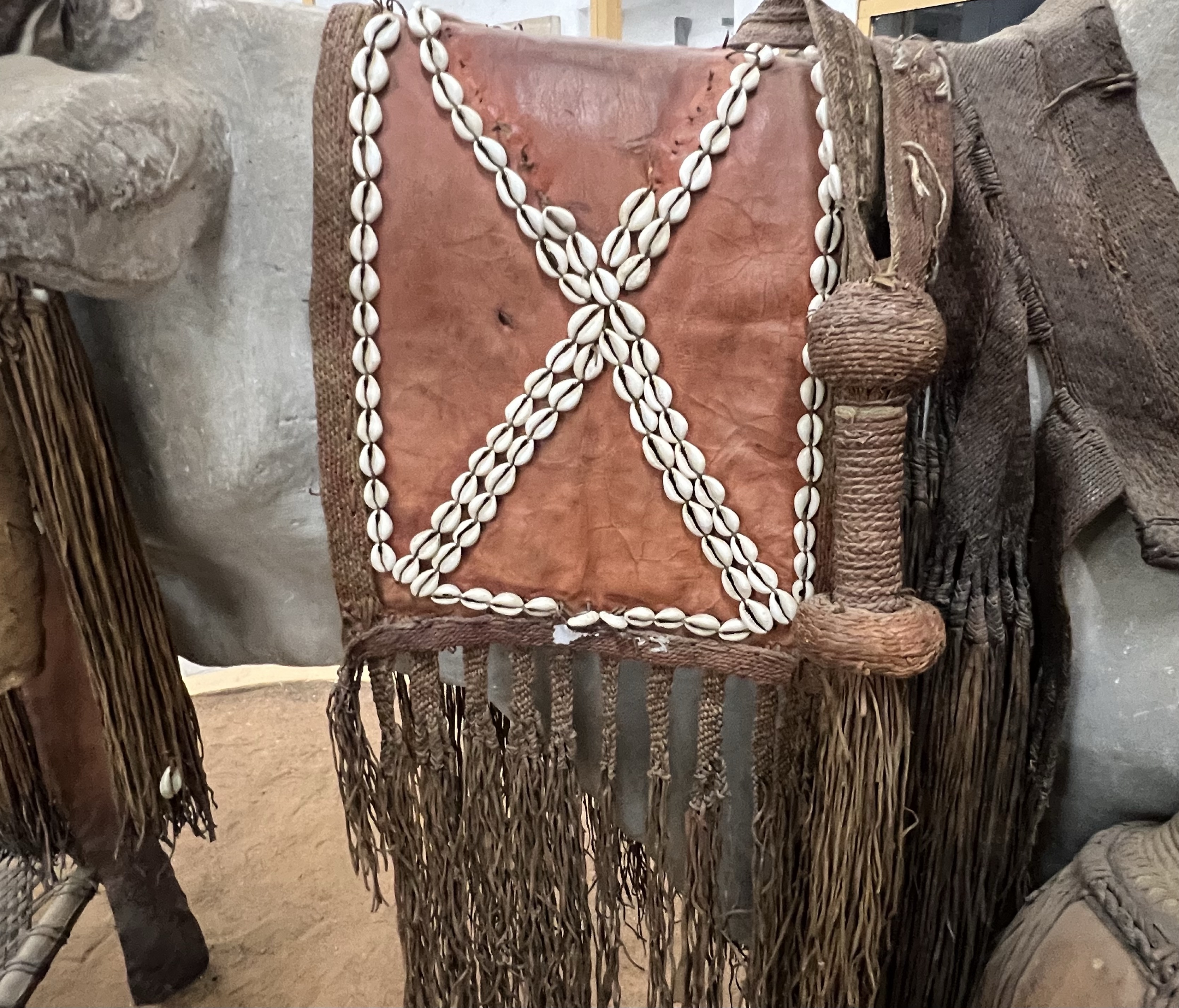
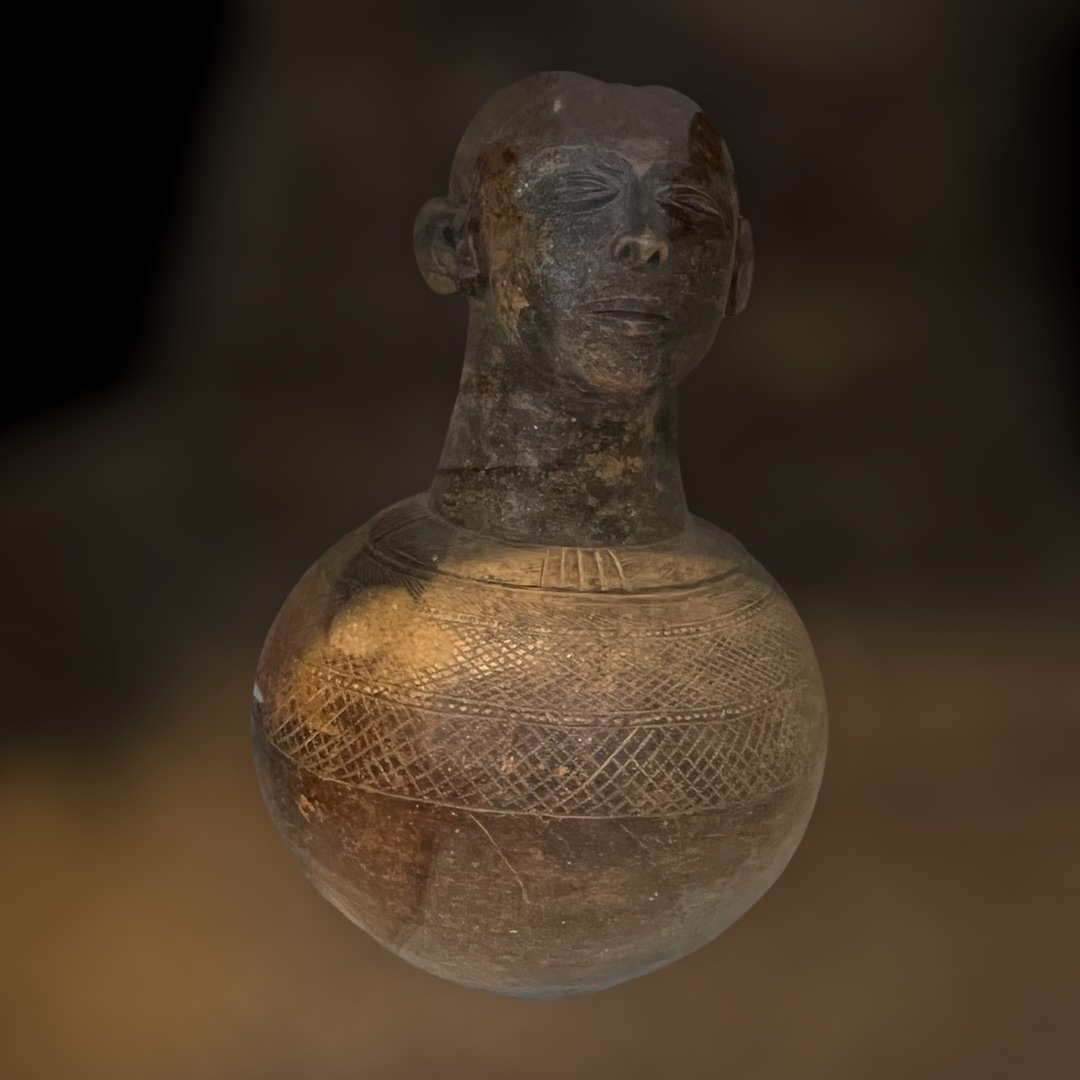
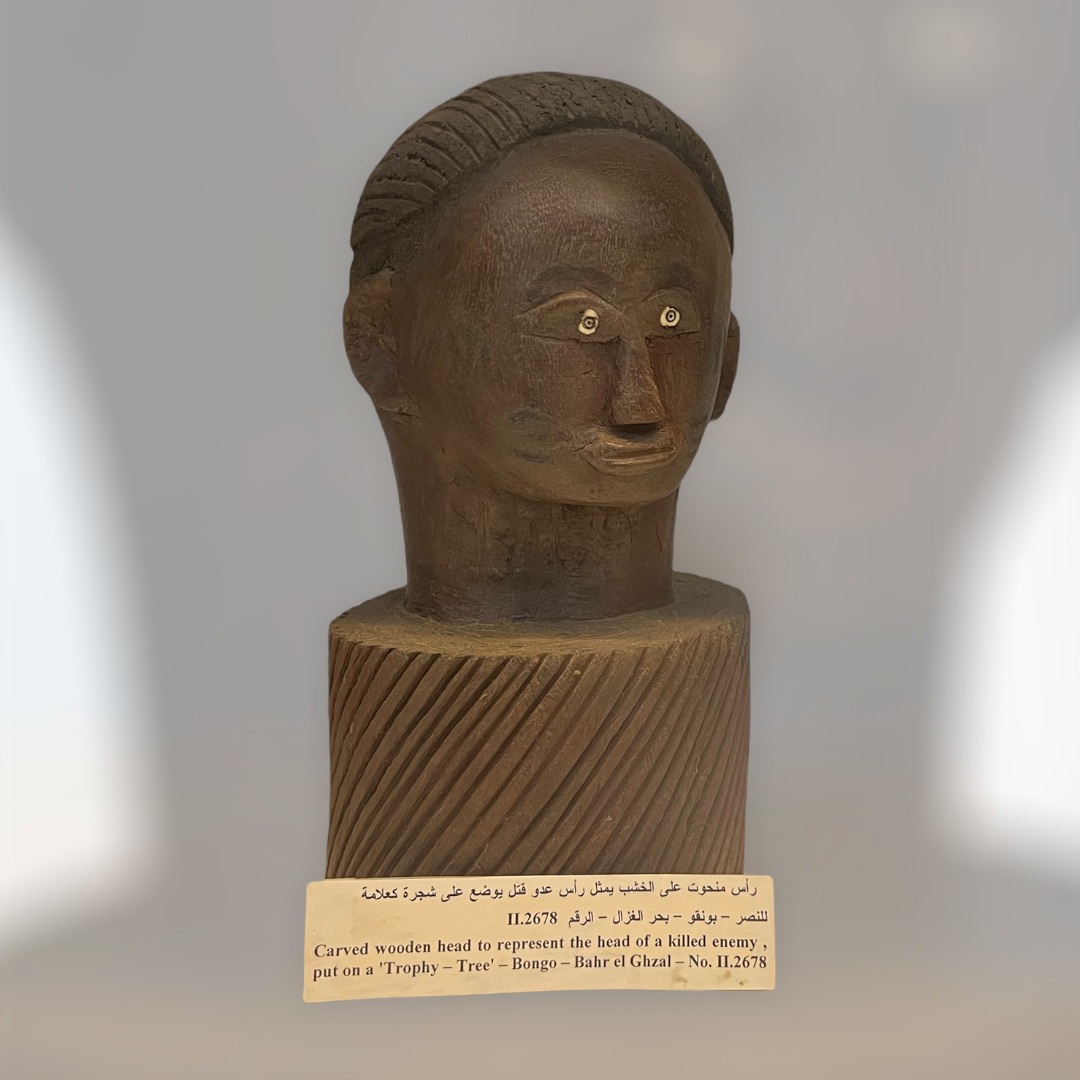
Above, figure stirring asiida (?), left and pottery figurine of the Shilluk, Upper Nile Province. Below, cowrie and leatherwork adornments, detail of the Baggara bull litter, together with food bowl, right. Below that, a beautfully made woman’s fan. Bottom left, black clay pot with a woman’s head, Zandi tribe and right, carved wooden head, labeled as representing the head of a killed enemy, placed on a trophy tree, from Bongo, Bahr el Ghazal. Zoe Troy advises that this is in fact a commemorative statue removed from a grave.
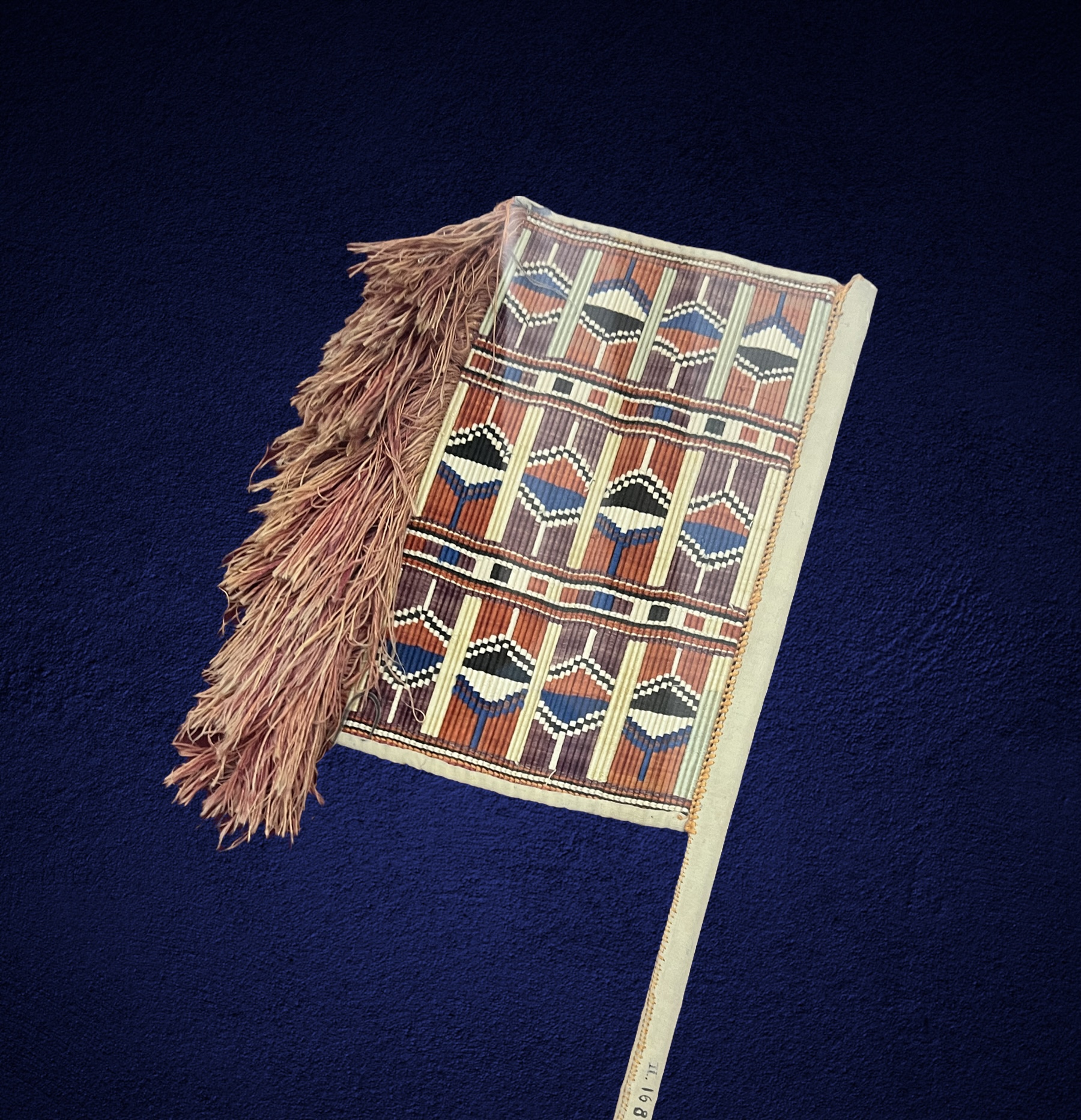
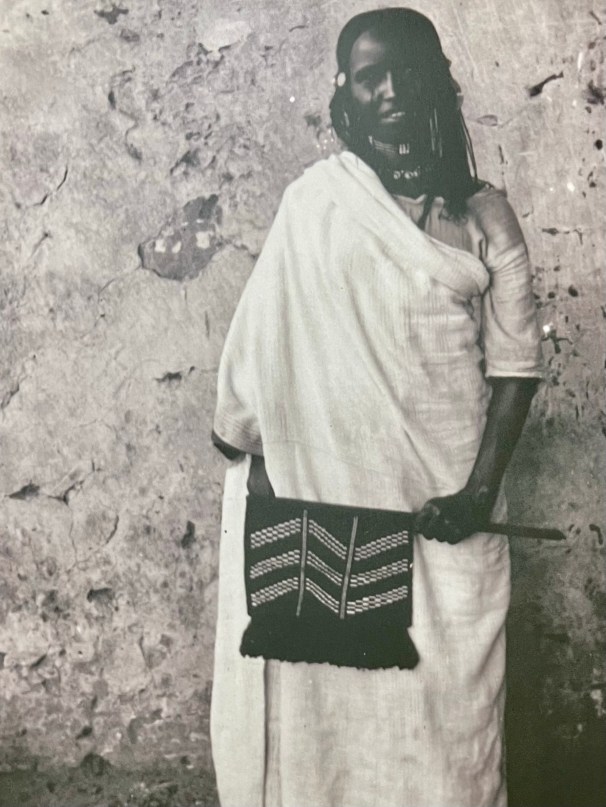
Below, young woman holding her fan.
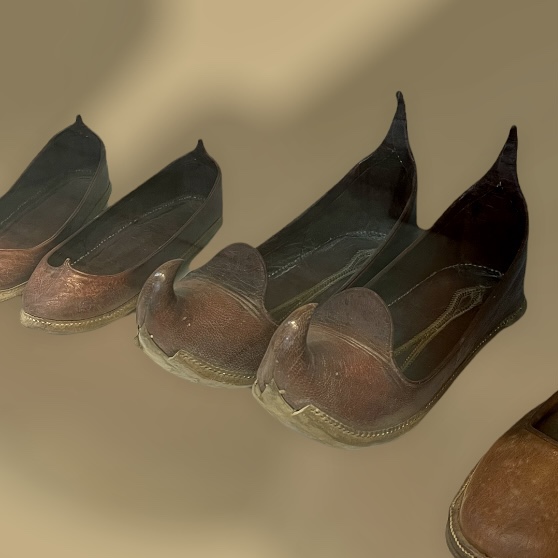
Below, a selection of 19th century “gentlewoman’s shoes” and sandals (from Omdurman?).

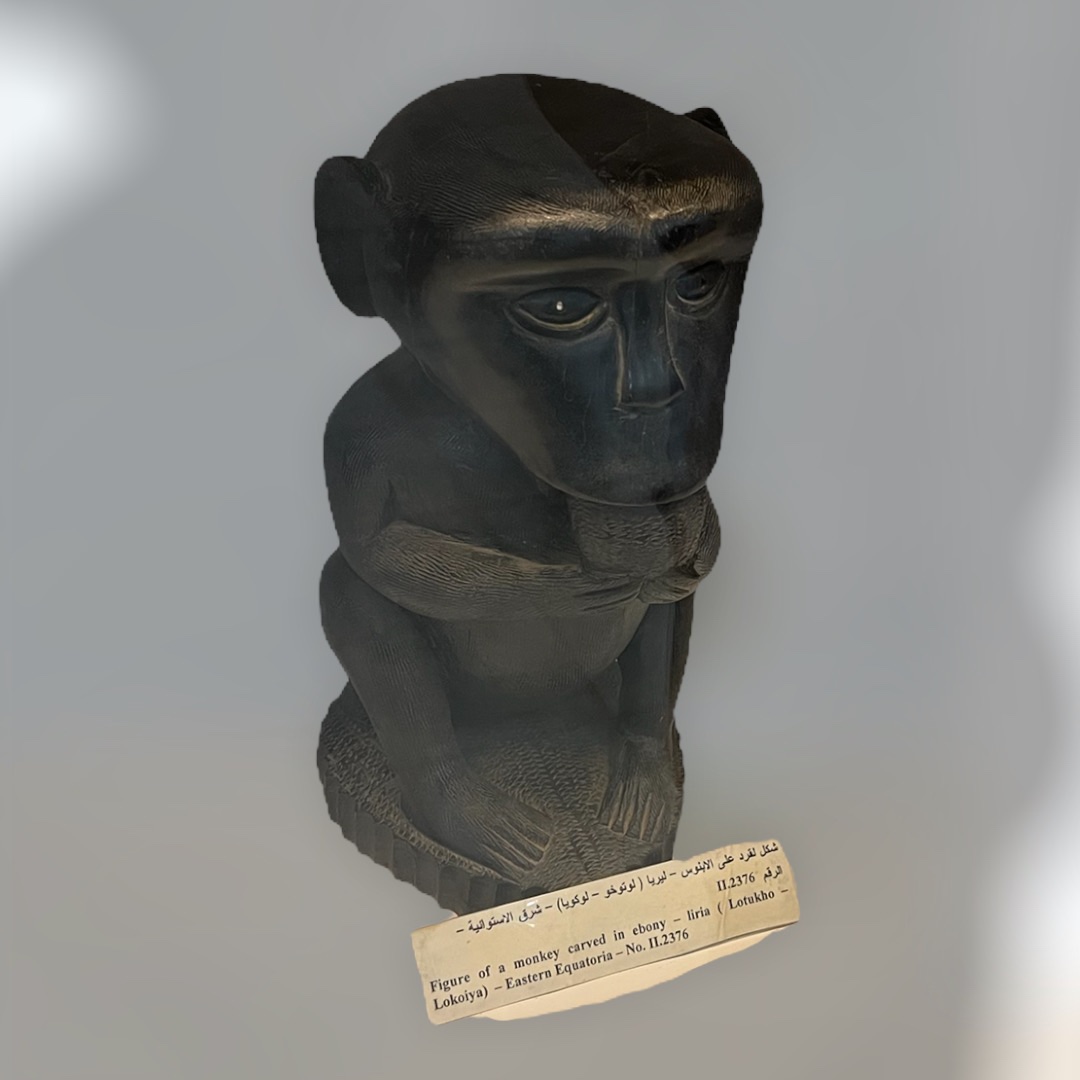
Below, delicate ebony figure of a monkey, as labeled.
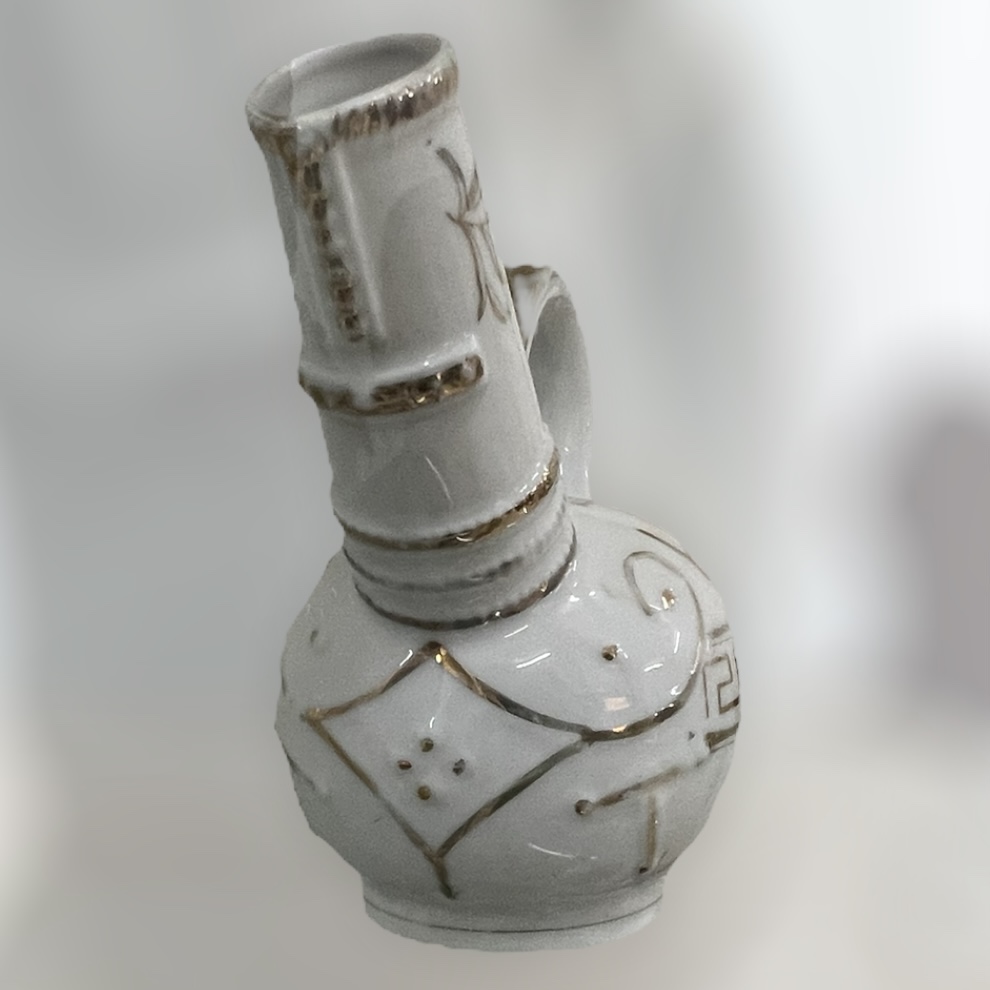
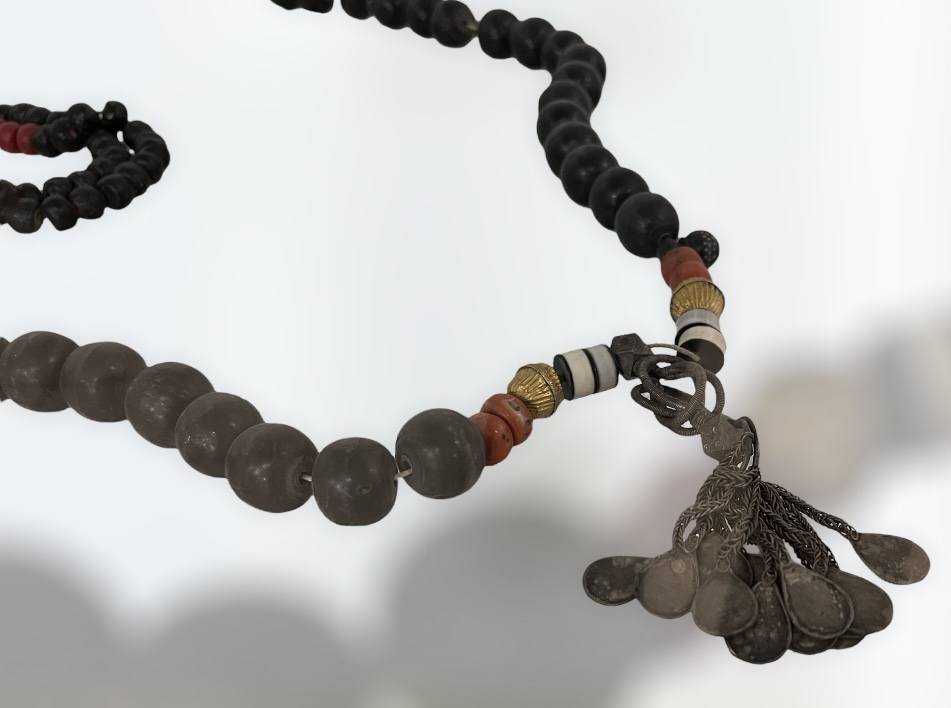
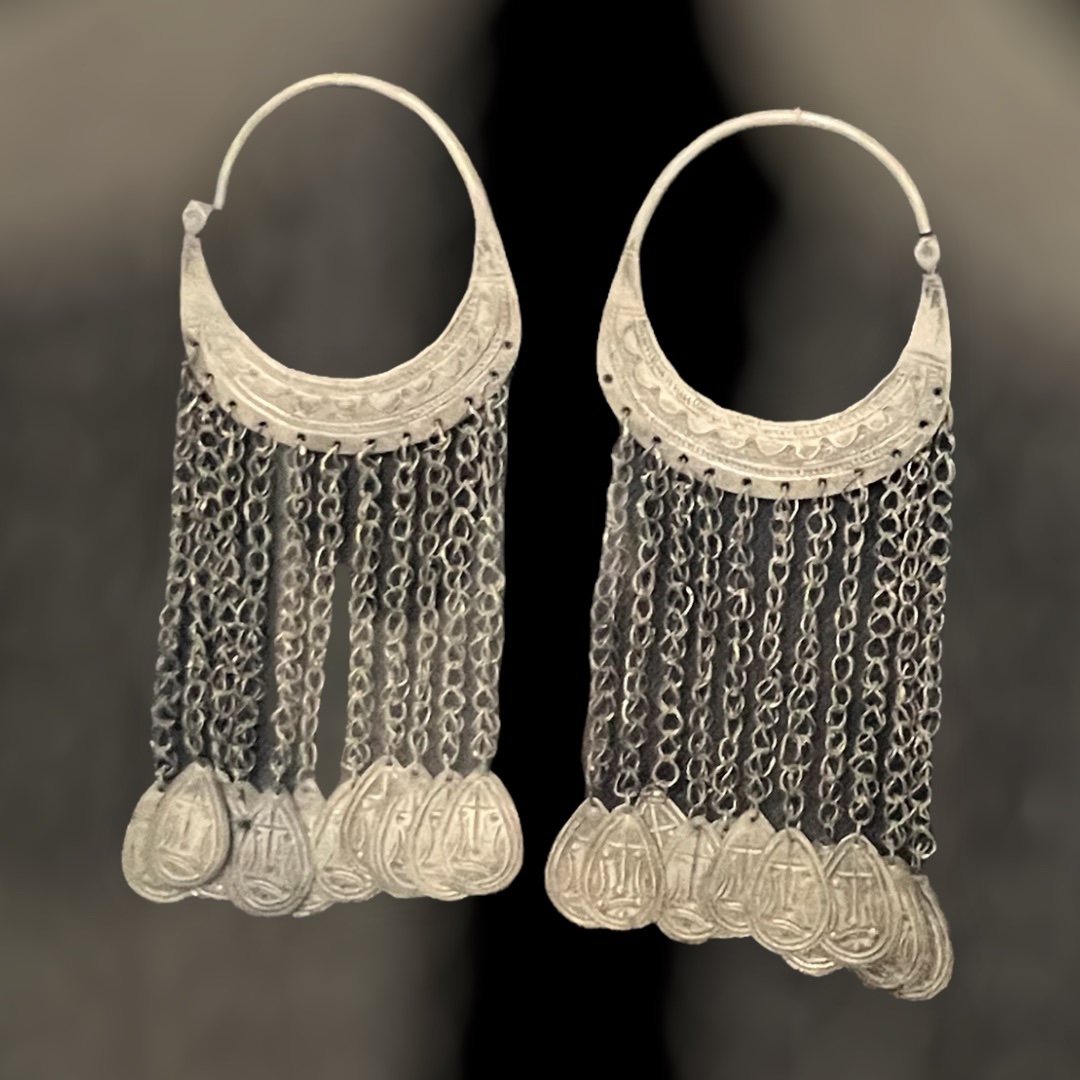
Below, china coffee pot from Omdurman and right, kohl pots and pins for applying kohl eye liner. Below them, beads (origin unclear) and a pair of silver earrings from the Misiriya, Arabs of El Jeneina, Darfur. Learn more about the fascinating history of kohl use in Sudan in Who will trace the kohl for our Eyes?


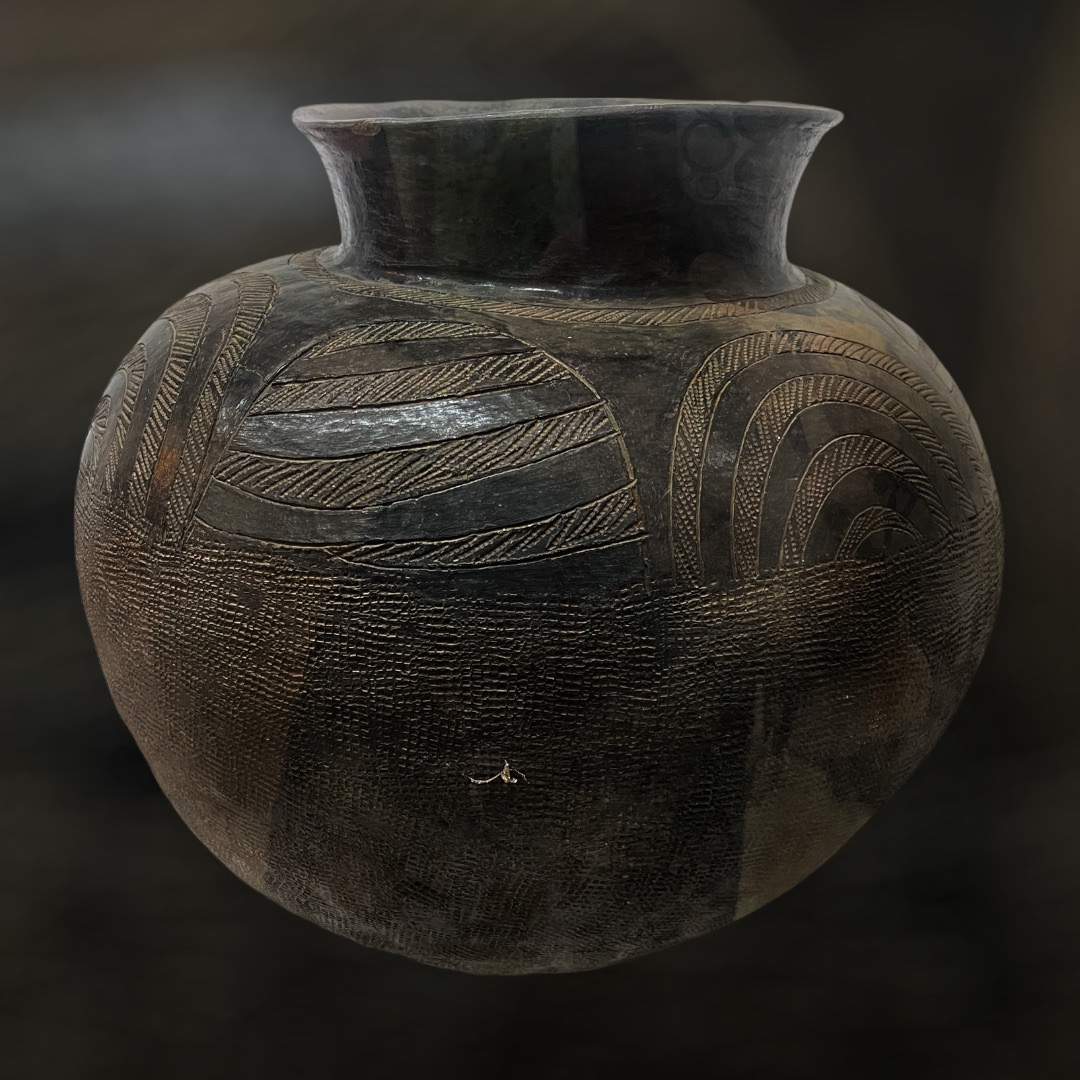
Below, example of fine earthenware craftsmanship, Nuba Mountains.
For more on Sudan’s ancient culture of pottery manufacture, see
The Scorpion and the Coffee Pot and Giving Form to Clay
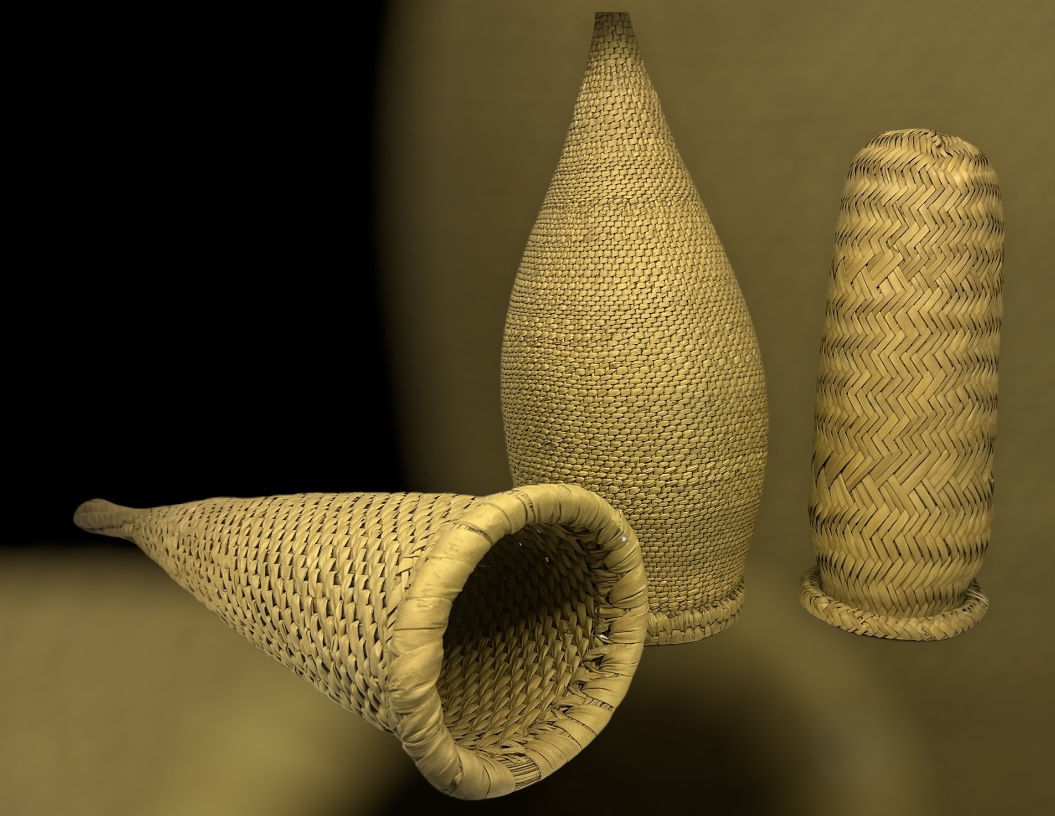
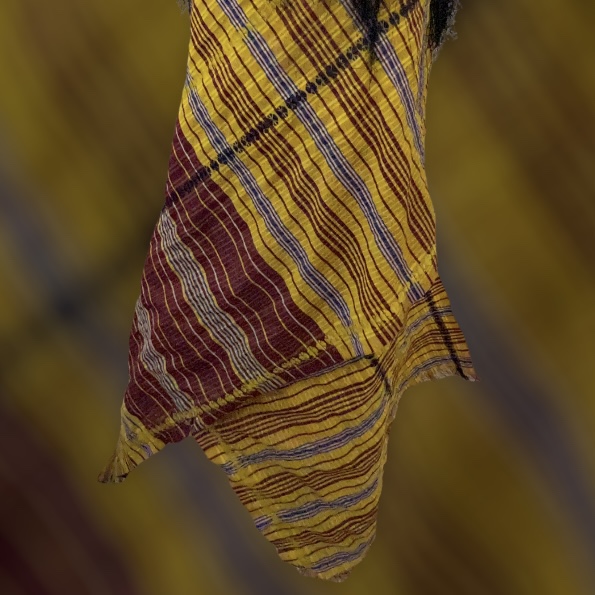
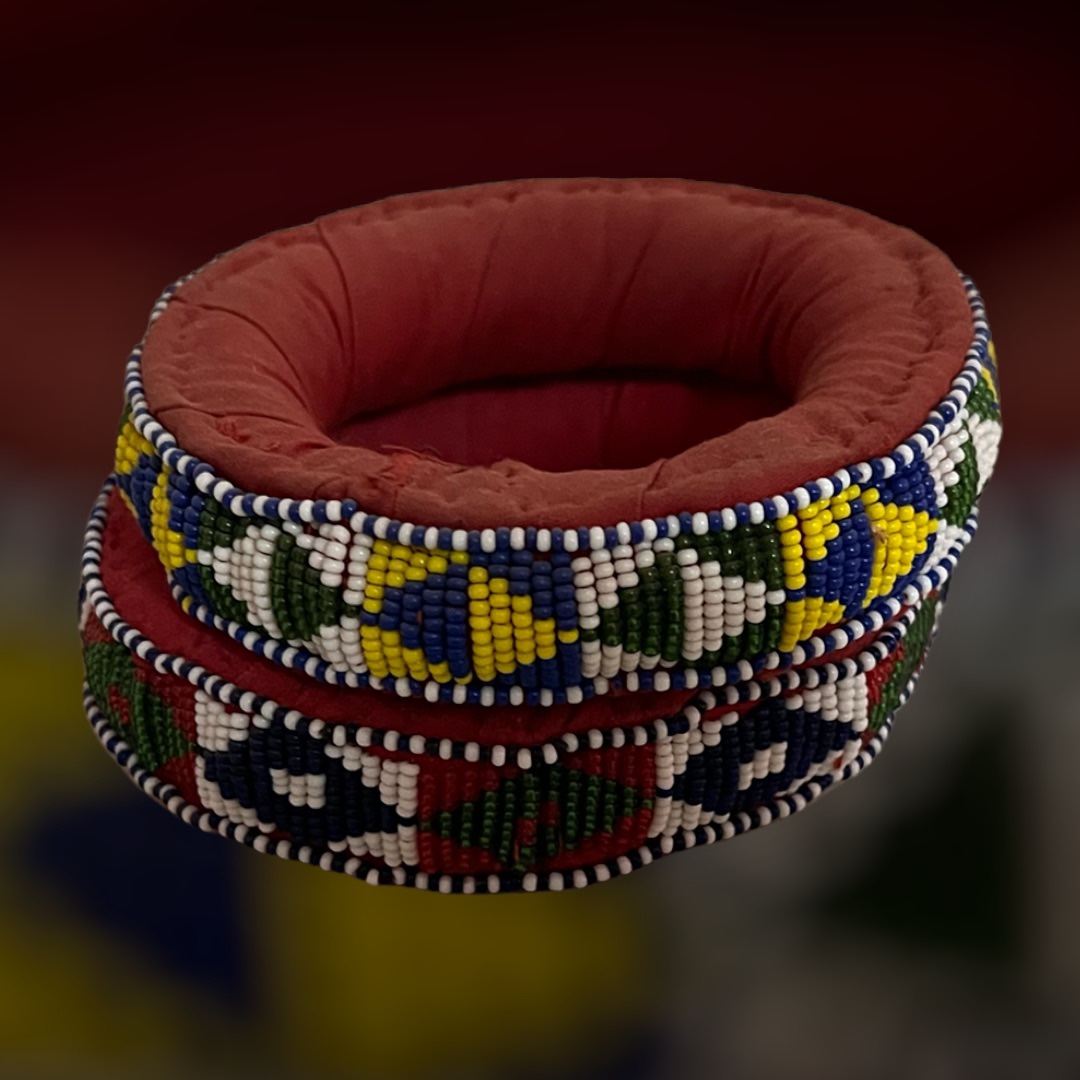
Below, right the red and gold striped garmasis or northern Sudanese wedding toub, coffee pot stands or wagaiyah and more examples of basketry and elegant 19th century shoes including the elaborately pointed dress shoes from Berber. See examples of modern Sudanese weaving, basketry and other handicrafts in Weaving Better Futures and Towards Economic Empowerment
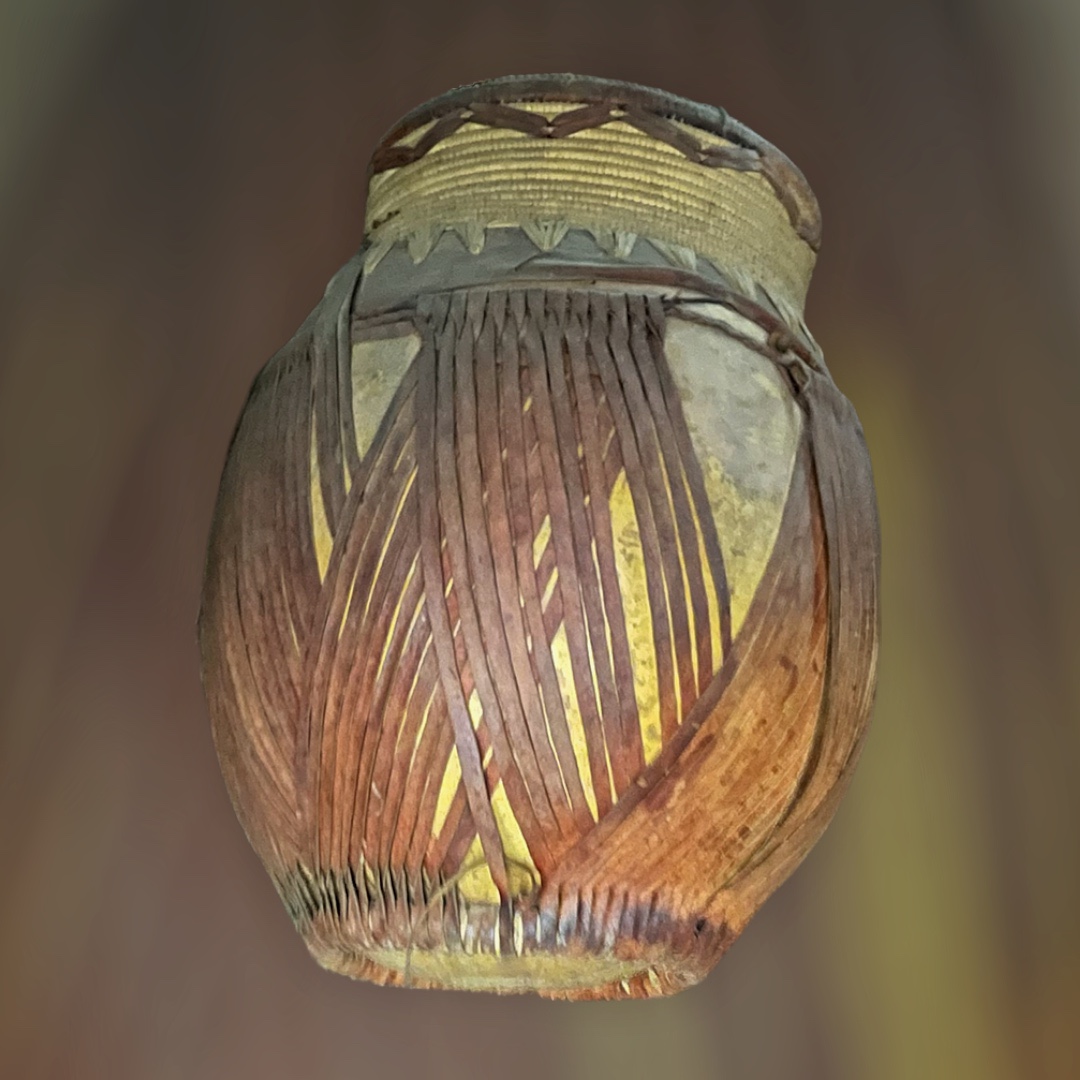
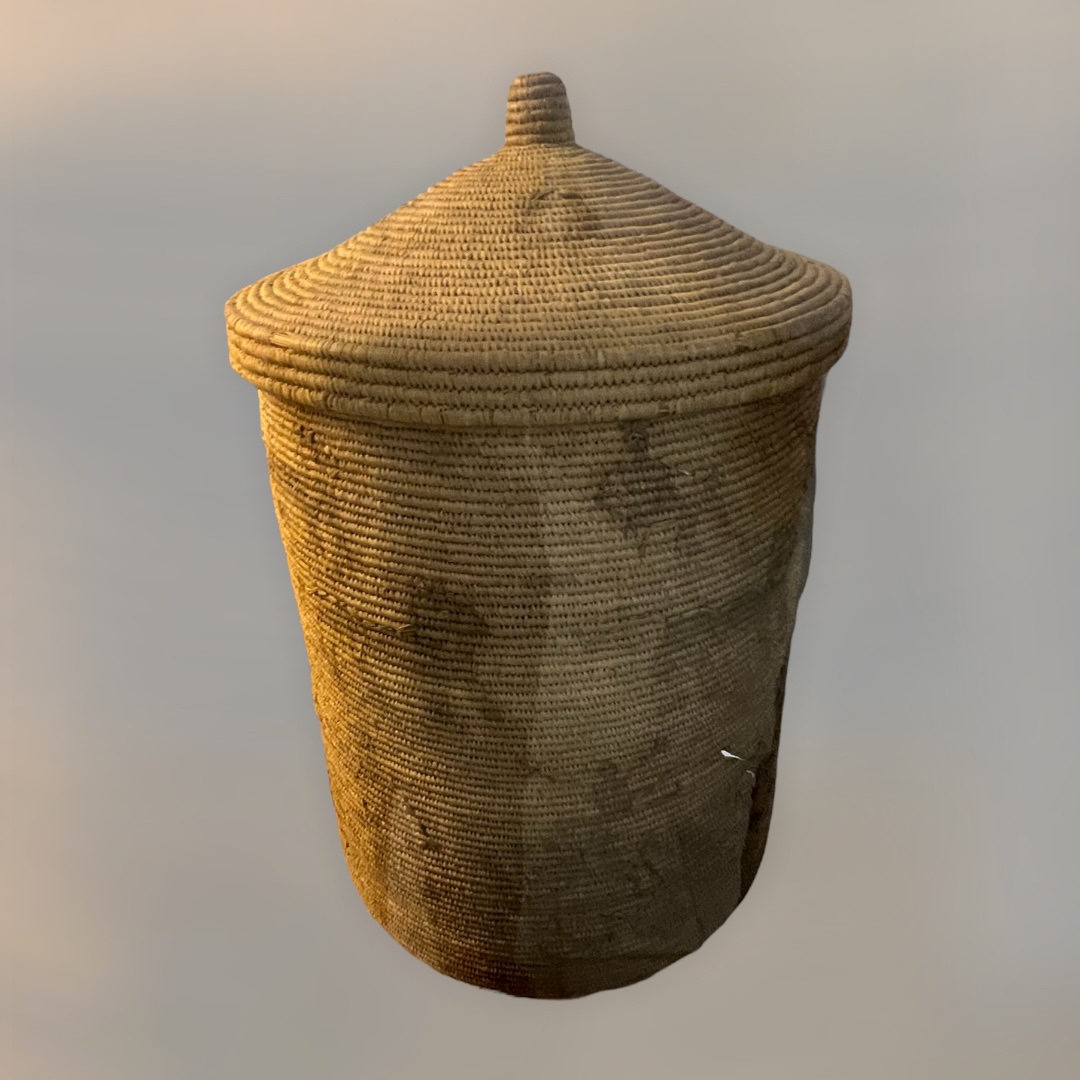
Below, detail of scenes woven into the food storage basket above.

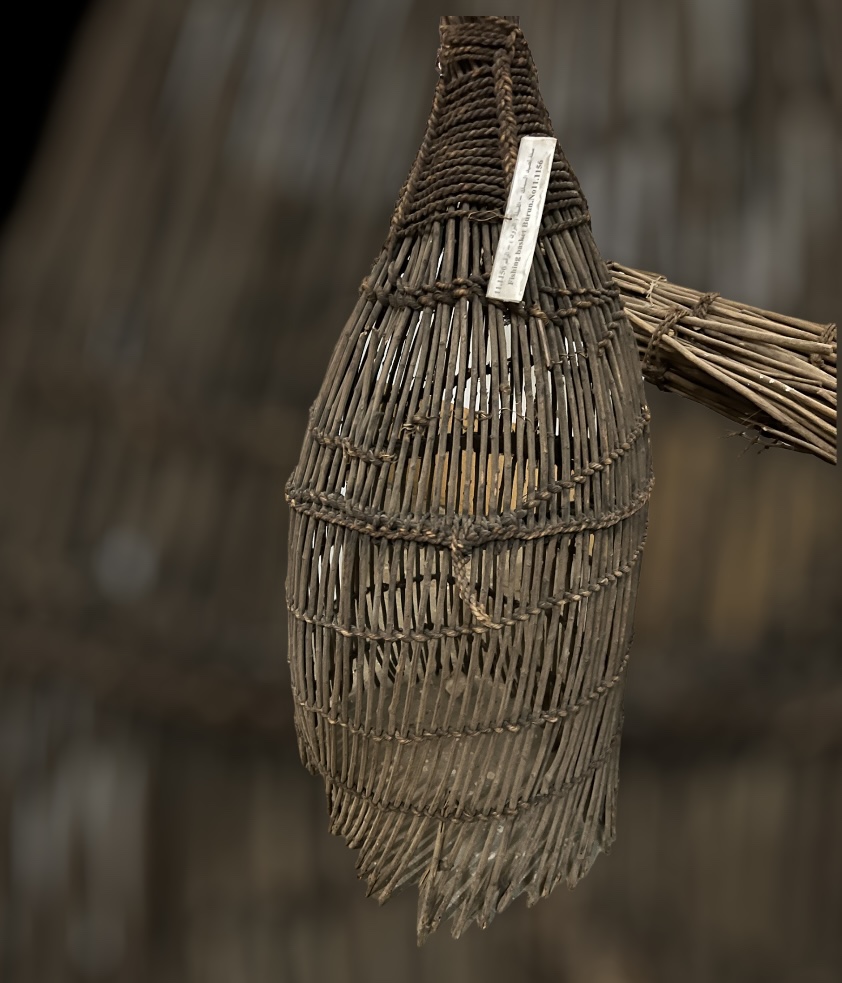
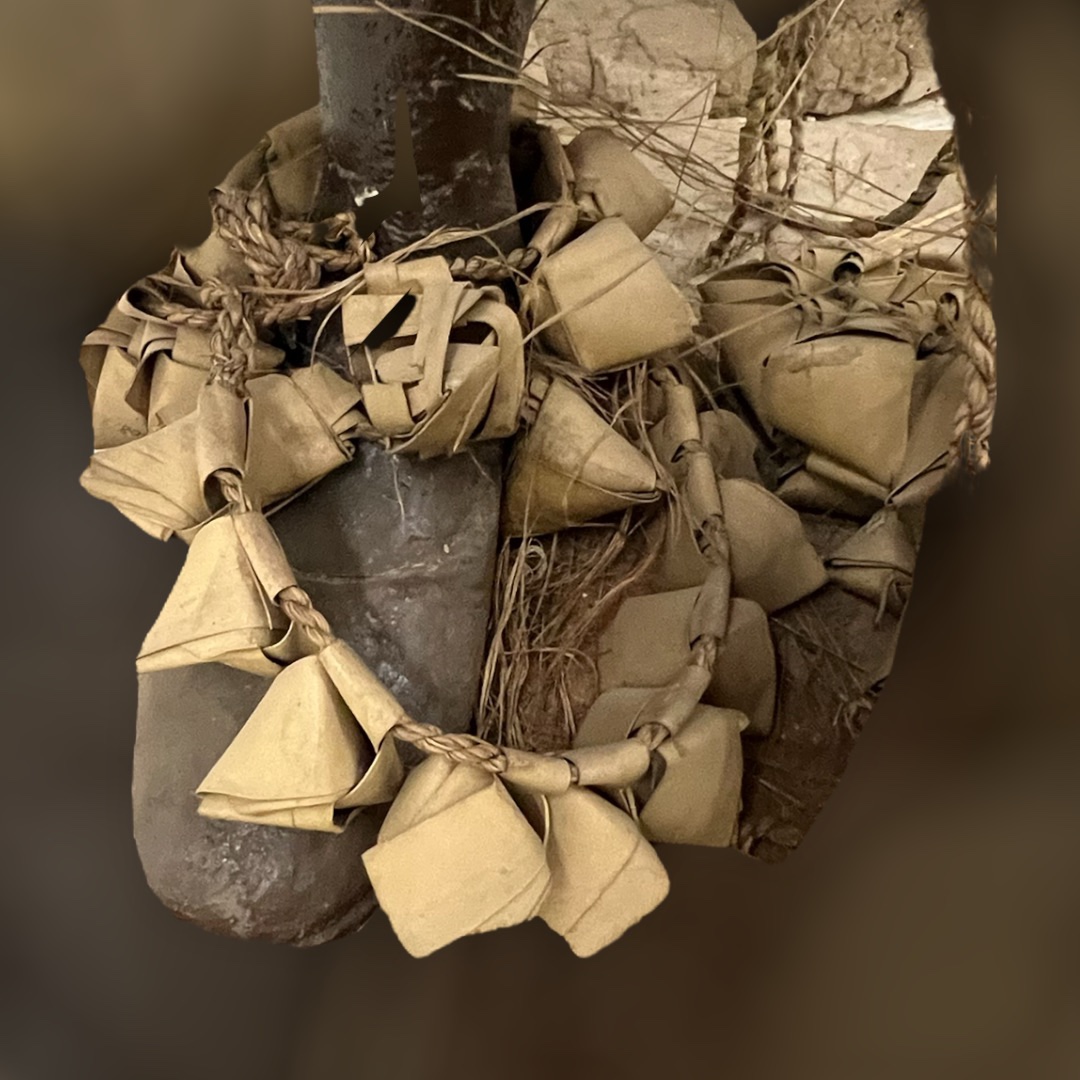
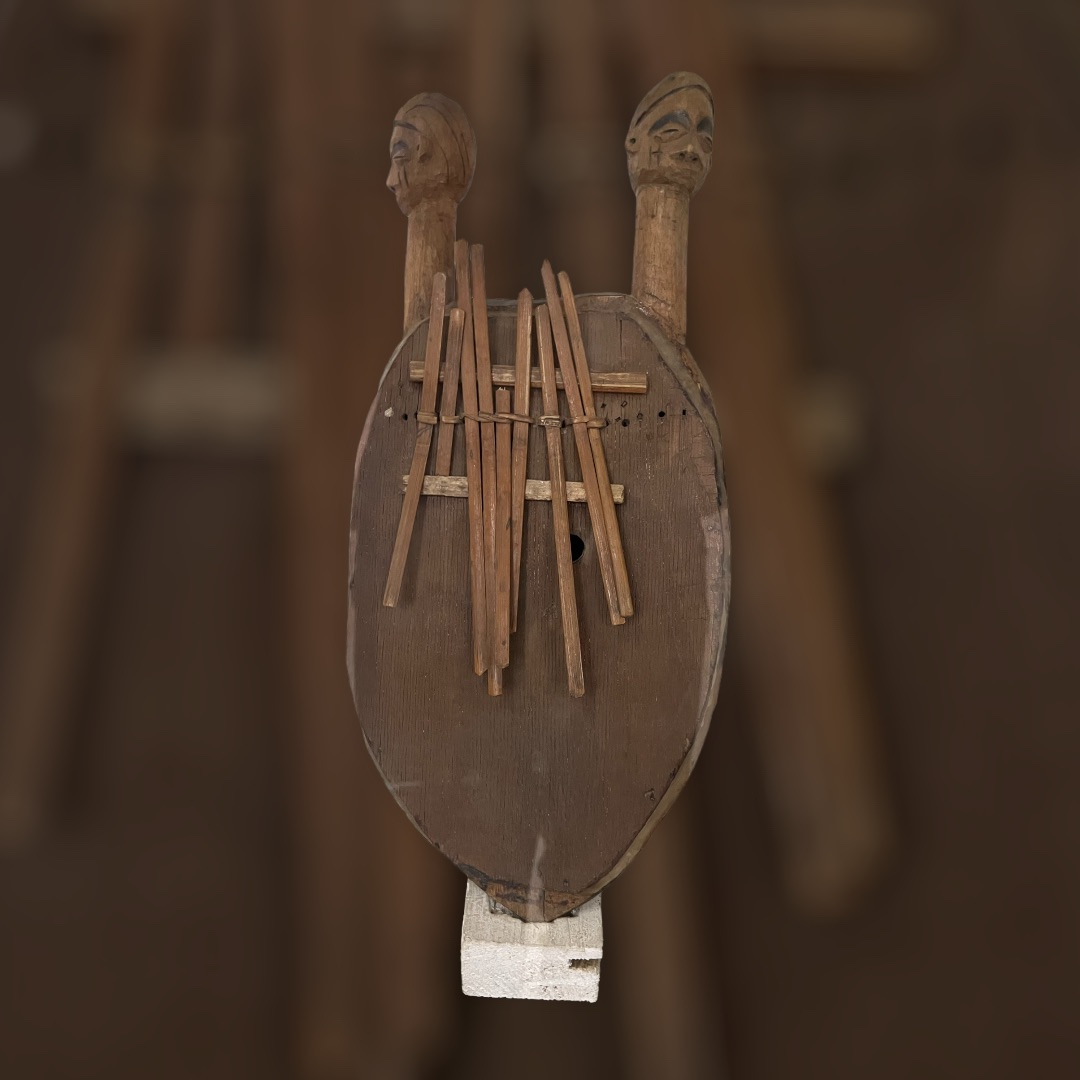
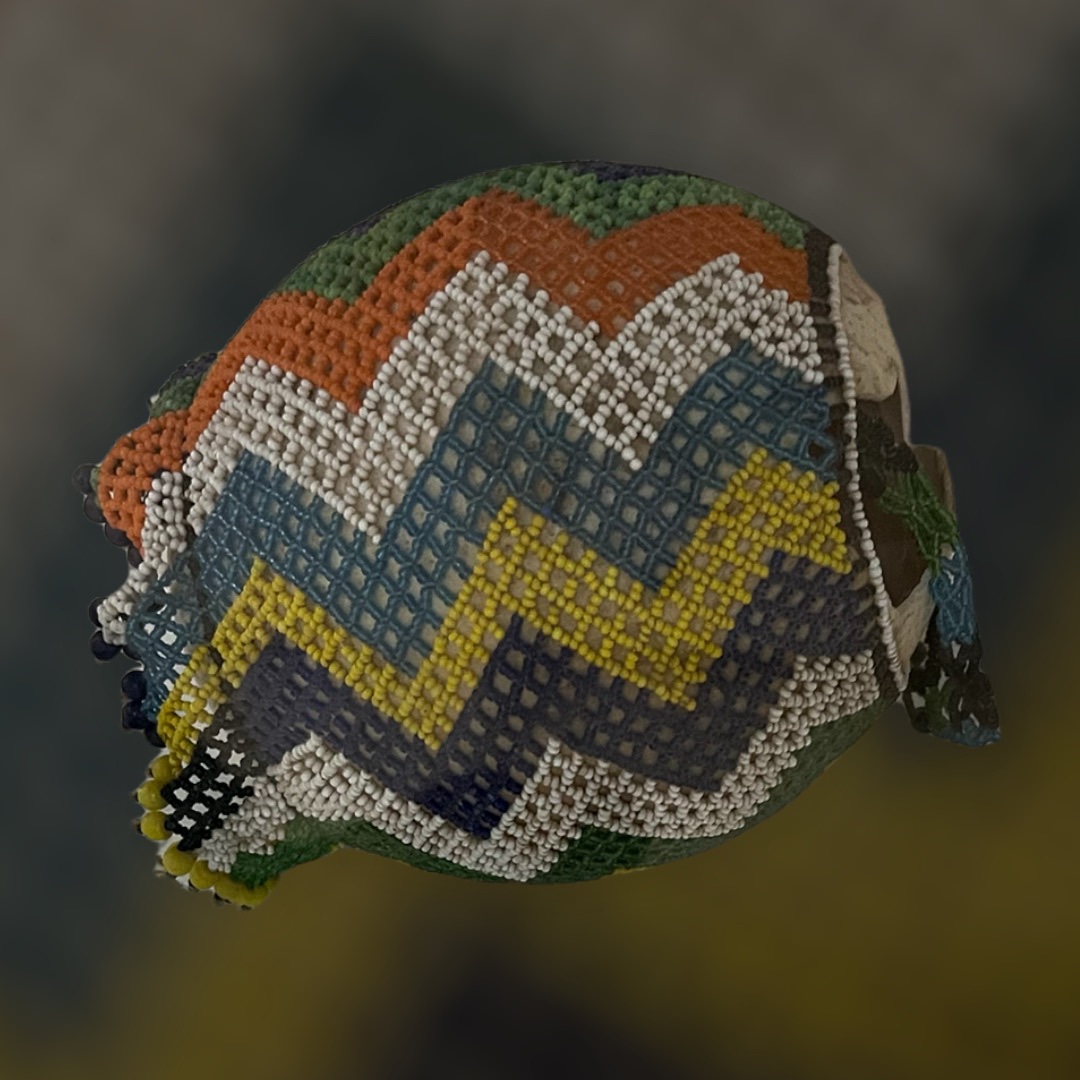
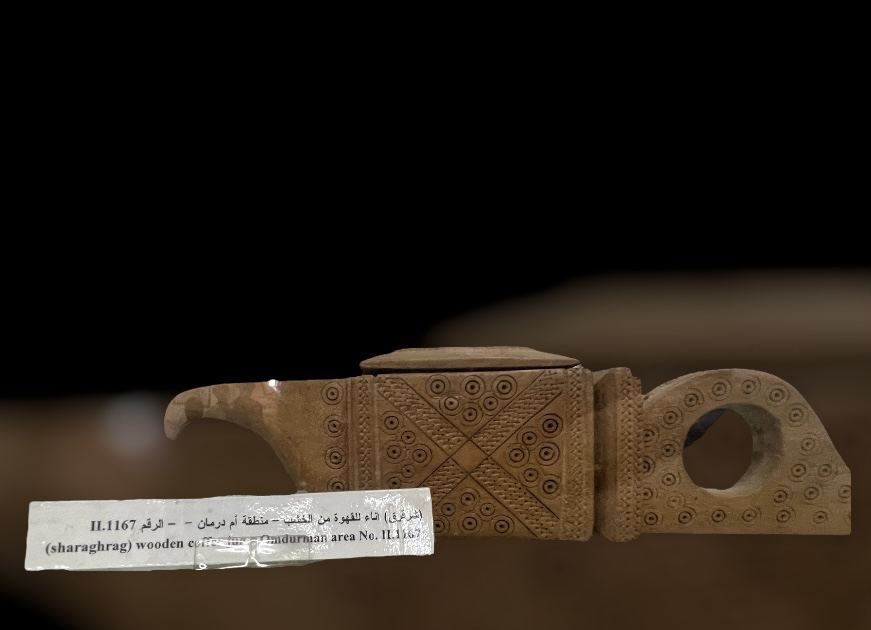
Below, more prayer boards, a basket fishing net from South Sudan, Kambala foot and leg rattles known as kashkash, a Zande tribe two-headed lyre, ornamental beaded ostrich egg and wooden coffee pot or sharaghrag, from the Omdurman area.

And finally, below, a leather bottle (rukwa) for ablutions, made in karkug with ebony stopper, from the Omdurman area and decorated pot with three necks, Nuba tribe, Kordofan.
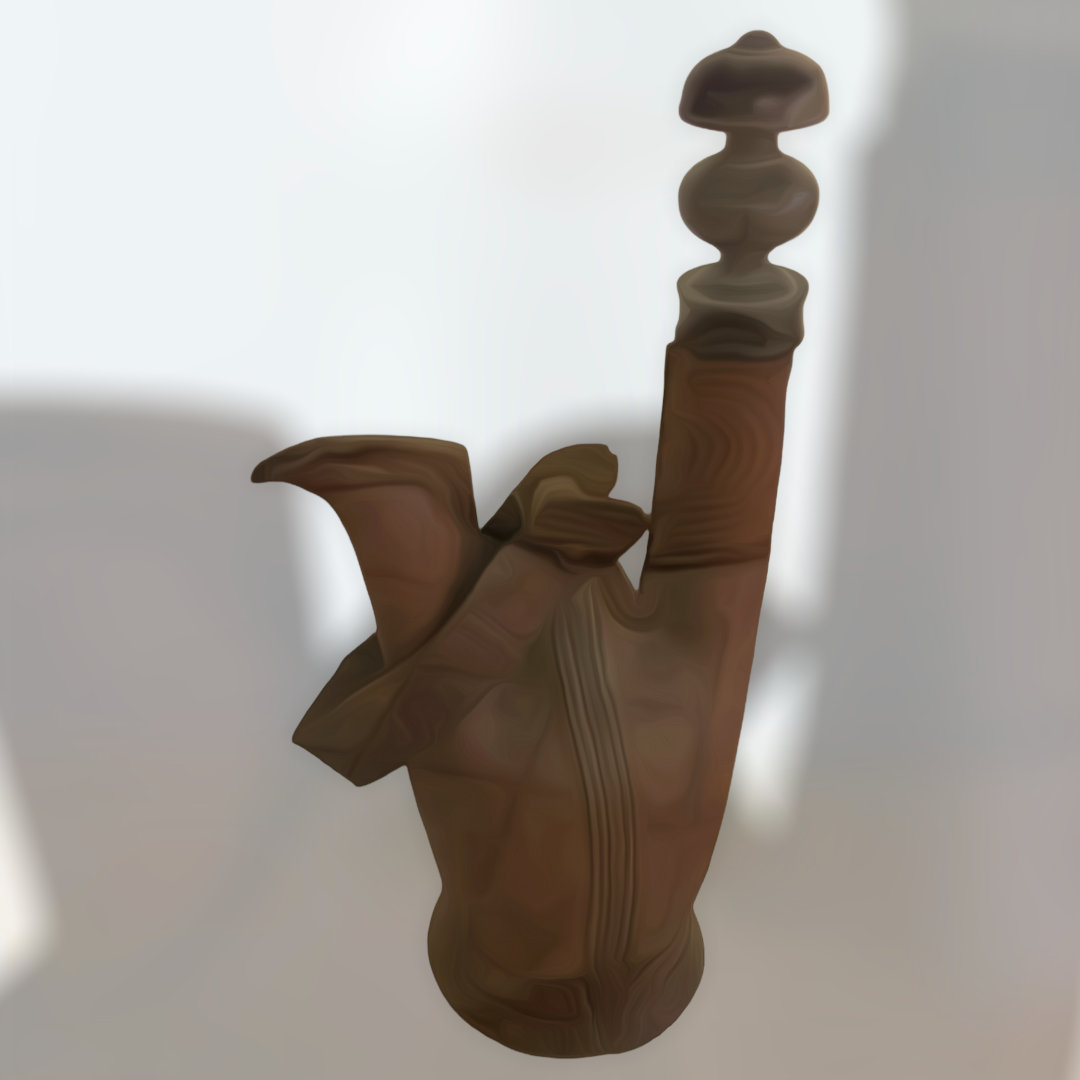
And a decorated pot with three necks, Nuba tribe, Kordofan.


Learn more about our life changing educational work in
Scenes from Our Orphans’ Schooling Programme
See too Community Literacy, Latest News and At a Glance
 Women's literacy in Sudan
Absolutely wonderful images of the Ethnographic Museum in Khartoum, a place I’d love to visit.
LikeLike